Li: It shines because it first found something to cling to
DustEcho Editorial
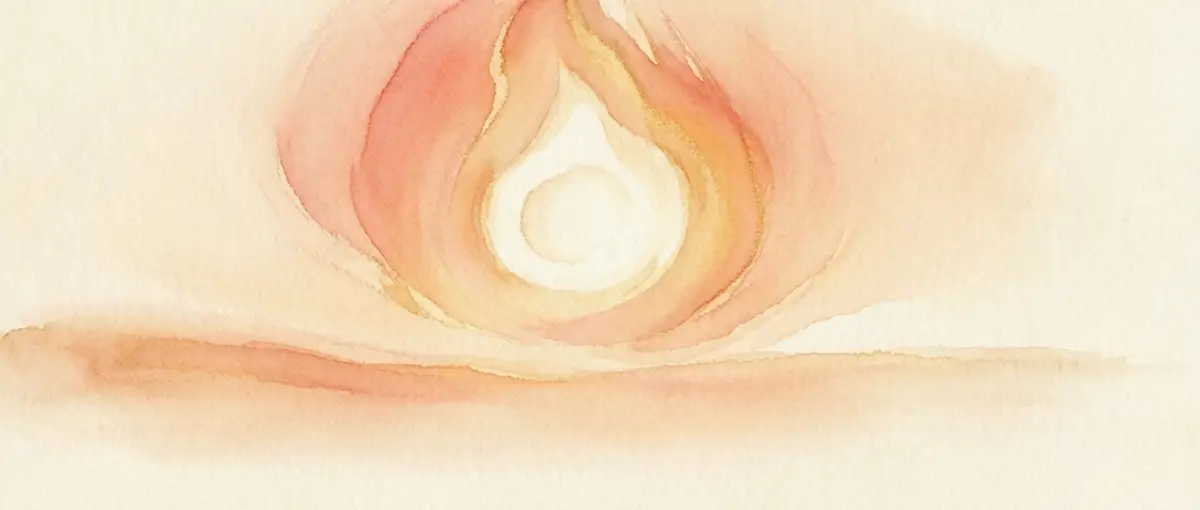
In the I Ching, Li is one of the eight trigrams. Its symbol is two yang lines above and below with one yin line in the middle (☲), standing for fire, and also for "li" — not "pretty," but "to attach, to cling." The ancients said "Li means to cling": the sun and moon cling to heaven, the hundred grains and plants cling to earth. Meaning: fire can't burn on its own; it must cling to the firewood. Light can't shine on its own; it must cling to a thing. What the Li hexagram talks about is how a person "clings," how they "shine," and how to not lose themselves in clinging.
It's not the same as the "fire" we wrote about before — that piece was about blazing upward, about burning bright but brief, about purification. Li isn't about fire's heat; it's about fire's "brightness" and "clinging." However vigorous a flame, leave the wood and it dies; however bright a person, they need that thing which makes them bright.
To shine, you first need something to cling to
The core of Li is "clinging." The flame isn't choosy, but it must land somewhere to burn. A person is the same: you need something to "cling" to — a work you love, a right crowd, a value you're willing to brighten for. Without clinging, a person drifts, like a rootless flame scattered by any wind. Many who feel "empty," "no drive," aren't lacking ability; they just haven't found the firewood they should cling to.
It sees clearly because it isn't murky
Li also corresponds to "brightness" among the trigrams. Fire's light is clear; it tells things apart. When a person's heart is always a murky stew — can't think what they want, can't weigh what matters — it's hard to be "bright." The brightness Li teaches isn't cleverness; it's clarity: you know what you cling to, why you shine, who you shine for. Clarity itself is a kind of light. People draw near you because you helped them see something clearly, not just because you're warm.
That hollow in the middle is the key to its capacity
The middle of the Li hexagram is a yin line, empty. The heart of the fire is, paradoxically, empty; precisely because it's empty, it can take in wood and keep burning. A person who packs themselves too full — no room left to hear others, no space to take in new things — the fire smothers and won't shine long. Li reminds: those who shine and last all keep a hollow in the heart. That hollow isn't weakness; it's where others and change can fit.
It clings, but that doesn't mean losing itself
Clinging is easily mistaken for "having no self." But Li's clinging is fire clinging to wood: the fire stays fire, the wood stays wood, both remain. A person clinging to a job, to a relationship, doesn't thereby melt into it and lose shape. Healthy clinging is "I'm brighter because of you, but I am not you." Bad clinging is fire leaping into the wood and burning to ash together — that isn't clinging beautifully, that's ruin.
"Bright twice" means shining and shining again
The image-text of Li says "brightness acts twice, Li" — not burning out in one go, but one brightness then another, continuously. A person in good form shouldn't be the occasional burst; it's this stretch shining, then the next stretch able to keep shining. Lighting up once on outside hype is easy; shining steadily through your inner "clinging" is Li's craft. Get the thing you cling to right, and brightness is sustainable — no need to relight every time.
It can also burn too far
Li is fire; fire can illuminate and can also consume. Clinging, taken past its line, becomes fixation — cling to something you can't have, and what burns is yourself; cling to someone who drains you, and what's bright is them while you go out. The Li hexagram doesn't say "just cling and it's good"; it says "cling rightly." Telling whether clinging nourishes or devours is the lesson Li leaves each person.
It fears a chaotic wind, yet borrows wind to spread
A flame most fears a gust of chaotic wind scattering it, yet the right wind makes it burn through all the better. Clinging is the same — environment, people, timing are both the wind that can snuff you and the wind that can help you. A person clinging to the right thing, met by the right moment giving a push, shines with unusual steadiness; blown back and forth by the wrong people, they easily go out. Li doesn't tell you to hide from wind; it tells you to learn to read it: is this wind here to help you, or to put you out?
Who you shine for decides what you cling to
Some cling to be seen shining by others; some cling because the thing itself makes them want to shine. The object clung to may be the same, but the motive differs. The former shines wearily, always adjusting the angle to please the wind; the latter shines quietly, the fire knowing where to burn. Li's brightness leans to the latter — if what you cling to is only traded for applause, the fire will sooner or later burn for the wrong person. Ask first who you shine for, then decide what to cling to.
It can go out too; don't mythologize the shine
Li teaches brightness, but fire does go out — that's fact. A person who makes their "shine" something that must be always on, always steady, only grows anxious — afraid that if it ever goes out, they're nothing. Li never says fire can't go out; it says: cling rightly, and even gone out it can be lit again. Allowing yourself a stretch of not-shining, a stretch of dark, makes the next shine more real. Treating brightness as the norm and dark as the exception is the composure Li leaves with people.
Li's brightness is double
The image-text says "brightness acts twice" — that "twice" isn't lighting up two times, but illuminating outer things while also illuminating yourself. A person busy only beaming outward to please others' eyes ends up dark inside. One who truly shines first lights their own lamp clearly, and only then incidentally lights what's beside. "Brightness acts twice" performs the two acts of "self-brightening" and "brightening things"; miss either and it isn't Li. Many shine half a day, lighting only others, and turning back find themselves still dark — that isn't brightness, that's performance.
What does Li mean in the I Ching?
Li is associated with fire, brightness, and attachment: a flame needs something to cling to in order to burn. Read psychologically, it asks whether the people, values, or goals you attach yourself to actually help you see clearly.
How can I stay connected without losing myself?
Name what you are choosing to support and what you are not willing to abandon. A healthy attachment gives warmth and structure; it does not require you to erase your judgment or depend on one person for every need.
Want to understand what your brightness is attached to?
If you keep shining for people or goals that leave you empty, gentle self-exploration can help you choose a steadier place to rest your light.
So writing Li is writing a clear, bright kind of clinging
We don't write "the Li direction governs literature, so good for exams," nor "how to boost luck for a fate that carries Li." What we write is this: have you found the firewood that lights you steadily, and can you shine clearly, lastingly, without burning yourself? This old symbol, drawn with two yang strokes above and below and one hollow in the middle, looks at everyone drifting, empty, bright for a moment then out — fire was never the problem. The problem is whether you clung rightly.
True brightness isn't burning desperately to show others. It's finding the thing worth clinging to, then quietly, clearly, lighting yourself.
Keep reading: Zhen: The Thunder That Wakes Before It Warns · East: The Direction That Greets Every Morning · Dui: The Marsh That Is Also a Mouth
Written and reviewed by DustEcho Editorial for self-reflection and cultural inquiry—not counseling, medical advice, or a clinical diagnosis.
Not sure where to begin?