Bi Jian in BaZi: Independence and Self-Reliance
DustEcho Editorial
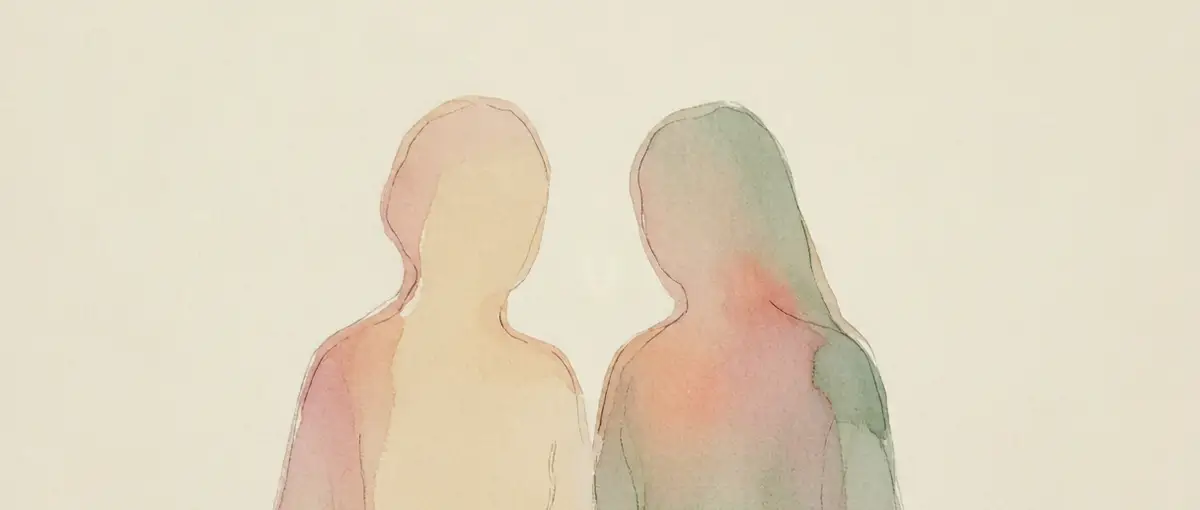
In BaZi, Bi Jian describes the instinct to stand beside yourself: solve problems alone, keep your own resources, and avoid becoming a burden. It is not a prediction about siblings or a command to stay independent forever. Read gently, it names both the dignity of self-reliance and the loneliness that appears when receiving help feels like debt.
You like handling things on your own, and you dislike being a bother to others.
Late at night, stuck on a project, he'd rather search until two in the morning than send a single "can you take a look?" Not that no one could help — deep down he feels that asking is like owing someone a favor. Moving, changing a lightbulb, filling out a baffling form — he does it all himself. People call him dependable, yet he keeps a quiet distance, as if he can handle anything, leaving no room for others to step in.
He isn't stubborn. This is a posture he grew into early.
What is Bi Jian?
In the traditional "Ten Gods" system, Bi Jian is one of the forces, literally meaning "one who stands shoulder to shoulder with me, of the same kind." The first time many hear of it, they're told it "represents brothers and sisters" — but that flattens a living temperament into a relationship label.
A more experience-near way to put it: Bi Jian describes a personality tendency to instinctively rely on yourself, treating "I'll do it myself" as your main source of safety. It isn't a specific "who," but a basic posture you take toward the world — try it yourself first; only ask if you truly can't; and most of the time, you never reach that "truly can't" point.
This posture shows up in small ways daily. When others hit trouble, their first move is to consult someone; when you hit trouble, your first move is to puzzle it out alone. Staying late to meet a deadline doesn't feel unfair to you — it brings a steady "if I pull it off, it's mine" kind of peace. You rarely say "I don't get it" or "help me," and even when truly stuck, you'd rather find a way around it yourself. Over time, independence stops being just a skill and becomes an identity — "I'm someone who doesn't need others."
It's not the same as "stubborn." Stubborn is spite — clearly able to ask yet refusing. Bi Jian isn't spite; you simply never put "needing someone" on the menu. You're not drawing a line on purpose; the line was drawn long ago, and you just walk your own side of it naturally. It isn't "needing to be strong" either — that wants to outdo others; Bi Jian only wants "I can handle it myself," not caring whether it beats anyone.
Its two sides
The good side first. Someone with strong Bi Jian usually carries a reassuring steadiness. You're reliable; what you promise, you finish. You have your own mind and aren't easily swayed. You're independent; you close out your own tasks and rarely dump trouble on others. In many teams, the person others trust with "just hand it to him" has Bi Jian in their bones — not because you're so capable, but because you naturally tend to your duties one by one, quietly.
The harder side. Turn the same force over and it becomes a wall. You don't dare ask for help, quietly equating "needing others" with "being a burden." Exhausted to your limit, you still say "I'm fine" — not to look tough, but because you genuinely don't know how to say "help me" — which to you is more awkward than doing double the work yourself. Over time, those around you assume you really can do anything, so they approach less and less. You don't lack need for people; you're afraid to let them see the part of you that also wants to be caught — afraid that once you speak, you'll owe someone, disturbing that clean, debt-free autonomy. What you maintain isn't "I'm strong" but "I owe no one."
In relationships
Friends find you easygoing but a bit distant; a partner finds you doing everything yourself, wanting to help yet unable to get a hand in. The way you show you care is often "I took care of it, don't worry about it," rather than "I'm a little tired, sit with me a while." So relationships easily stall at the "dependable" layer, hard to go deeper — when the other wants to draw near, you instinctively latch the door from the inside. Not from lack of love, but from fear that speaking up becomes "bothering them."
The hardest part is when something truly needs someone to hold you up — you don't know how to ask. When others want to be good to you, you push away first, saying "no need, no need," then quietly digest it alone. You may never lack people around you, yet few can truly get close — not because you're aloof, but because you've lived "independence" as a reason not to let anyone in. Feelings slowly thin out, not from not caring, but because you've kept life running so smoothly alone that you forgot someone might want in too.
With money
On money, someone with strong Bi Jian lives quite "alone." You tend to earn it, manage it, spend it yourself; you want financial sovereignty in your own hands — not that you distrust others, but "my money, I'll cover it" is what settles you. Going into business with others doesn't excite you; handing over financial control feels like giving up autonomy. In spending, you lean toward satisfying your real needs, not following the crowd to pay for face or show.
But Bi Jian is also the energy of "shoulder to shoulder," so you have another side: when a friend truly asks, you easily act on loyalty and spread it outward. You're not stingy; that clean "owe no one" feeling loosens at the touch of human feeling. Bi Jian in money also carries a meaning: it's the energy of "sharing side by side" — in cooperation, benefits easily get leveled out; you earn solidly, yet often don't keep the most visible share. To you, money isn't for comparison, but for standing firm on your own.
At work
At work, Bi Jian is the partner who works shoulder to shoulder, not the one standing at center stage. You fit working side by side with others, gaining footing by doing your part solidly, one piece at a time, without fanfare. You don't like being pressed down, nor much enjoy pressing others.
In cooperation you contribute steadily, but Bi Jian is the energy of "sharing side by side": credit and opportunity get evenly spread, and you don't much go after that most visible spot. To move up, you'll need to occasionally step forward and claim the part that's yours — what you did deserves to be seen, not just divided up.
How to live with this force
No need to throw away your independence; it's your good to begin with. Just practice one thing: asking for help isn't debt, it's an entry point for relationship. What you fear was never "can't do it" but "owing a favor" — so start tiny, with things too small to call a bother: let your partner go to the supermarket with you, let a friend help pick a gift, ask "taste this dish, is it too salty?" None of these weigh on anyone; they just give the people who matter a chance to come near.
Then sort out "I can" from "I must alone": you can do many things, but not everything must be done alone; someone wanting to help doesn't make you weak. Leave the door a crack open, and it won't make you "someone's debtor" — it'll just let relationship have a place to enter.
In closing
If Bi Jian is prominent in your chart, you may more easily experience this state. It isn't bad — just a posture you take toward the world: steady, doing it yourself, and inevitably a little lonely. And that lonely side can actually leave a crack for others to enter; you needn't become dependent, only allow yourself, now and then, to be caught too.
A modern psychological view
Bi Jian's "not wanting to bother others, afraid of owing favors" also echoes in psychology. If you often live your independence as a reason not to let people close, these pieces might continue the conversation:
- Why I keep saying what others want to hear — the habit of yielding in relationships, hiding the real self behind the other's expectations
- Why I keep one foot out the door in relationships — the distance within intimacy, close to Bi Jian's instinct of "I'll just do it myself"
- Why I feel awkward receiving kindness — equating "being cared for" with "owing a favor," exactly where Bi Jian gets stuck
What does Bi Jian mean in BaZi?
Bi Jian is traditionally associated with standing shoulder to shoulder with others of the same kind, and in lived experience it often appears as self-reliance. It does not mean someone must refuse support. A useful reading asks where independence protects your dignity, and where letting someone help would allow a relationship to become closer.
Want to understand your independence patterns more personally?
If asking for help often feels heavier than doing everything yourself, a personal reading can help you explore that pattern without turning it into a flaw. Start a personal BaZi reading.
Written and reviewed by DustEcho Editorial for self-reflection and cultural inquiry—not counseling, medical advice, or a clinical diagnosis.
Not sure where to begin?