Pian Yin in BaZi: Depth, Solitude, and Overthinking
DustEcho Editorial
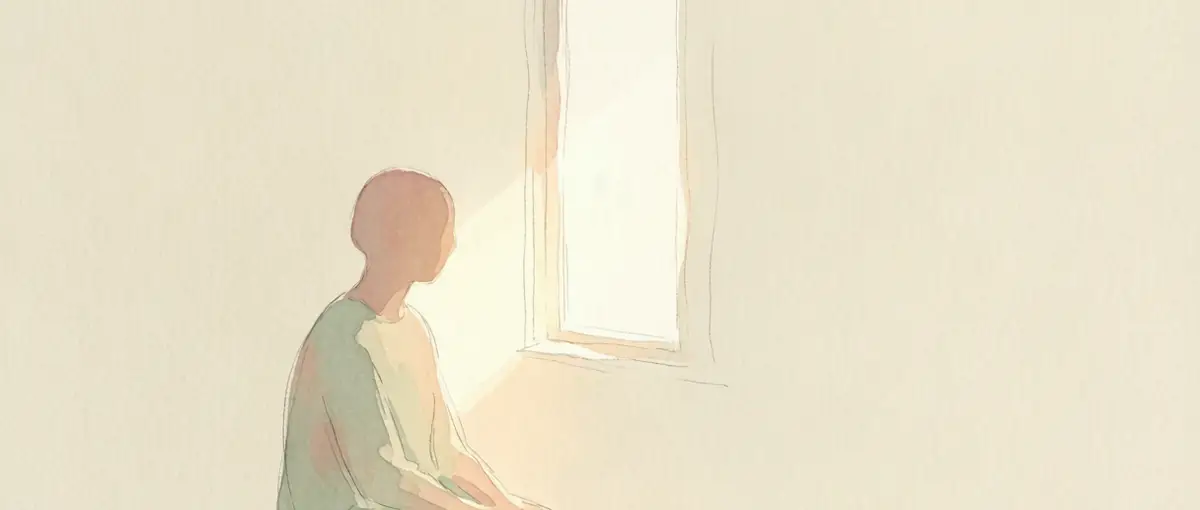
In BaZi, Pian Yin describes inward depth: the tendency to explore alone, notice what others miss, and build a private world of knowledge. It is not a prediction about a stepmother or a sign that someone is cold. Read gently, it names both the gift of niche understanding and the loop where thinking becomes a shelter from beginning.
You like being alone, and your mind often leaps far.
Halfway through a gathering, he suddenly goes quiet, gaze emptied — not unhappy, but his thoughts have drifted to something like "why don't clouds fall." He collects a pile of niche knowledge; when others chat about what's hot he can't join in, but mention his own little universe and his eyes light up. On weekends he'd rather stay alone with a book, taking apart some odd notion, than go chase the noise.
He isn't aloof; he has a whole world opening inward.
What is Pian Yin?
Among the Ten Gods, Pian Yin is one of the forces, often simply explained as "representing a stepmother" or "an irregular seal." Such talk stuffs a precious thinking tendency into a relationship label, and talks the spirit right out of it.
A more experience-near way: Pian Yin represents a tendency to explore inward and toward depth. Your attention naturally turns to corners others miss; you like chewing on the "why behind the why"; you enjoy the process of thinking a problem through alone. The way you meet the world is to drill in first, not to blend in first.
This inwardness isn't escaping crowds, but a cognitive instinct. Others scroll short videos for a laugh; halfway through, you'll go check "how was this effect made." Others nod at an opinion; you're already wondering "does its premise hold." Your brain is like a perpetually running excavator, digging down without stop. You may not be aloof — it's just that your excitement lives inside, not on the surface. A lively hall and a quiet study: your body is in the hall, your mind long back in the study.
It's not quite the same as "introversion" either. Introversion recharges inward; Pian Yin dives deep inward in interest. An introvert with light Pian Yin might just sit quietly; a Pian Yin-heavy person sitting quietly has a whole system building in their head. The niche facts you collect, the questions that surface at midnight — not idle quirks, but how you know the world.
Its two sides
The good side. A Pian Yin-heavy person often has astonishing depth and curiosity. You can stay alone a long time without boredom; meet a niche field and you can dive in for years; you don't follow the crowd, you have your own judgment. Many people with quirky ideas and unique angles carry Pian Yin's shadow. Your world is niche, yet abundant — others carry catchphrases in their pockets; you carry a whole map no one's heard of.
The harder side. Turn the same force over and it easily becomes overthinking. You think too much; even a simple decision can loop ten times in your head; your social battery is low, drained by a crowd; others find you interesting yet somehow hard to pin down for a meetup. You set your own bar high, so often "you know a lot yet can't land it" — the idea is a garden in your head, but in reality it always lacks a hoe.
In relationships
You're not cold; you need mental space. Friends find you interesting but hard to schedule; in intimacy you occasionally "drift" — body present, mind long gone to something else, and the other mistakes it for not caring. The way you show care is often quietly researching the problem the other mentioned, rather than saying a tender word. You remember a niche fact they mentioned in passing, yet may forget to say "I care about you."
Most wearing is the over-analysis: a small thing, spun by your imagination into a long drama. Loneliness visits often too — not from no one around, but "no one can really enter my world." You accumulate so many thoughts yet can't find the right ear, and over time prefer your own company. You know you're not short on friends; it's just that connection "truly heard by a soul" is especially rare, and especially precious, to you.
With money
On money, a Pian Yin-heavy person lives quite "picky." You don't pay for what's popular, don't chase hot investments; the pits others rush into, you can't be bothered to join — your money would rather go to your own little universe: niche books, obscure gear, a hobby you've studied half a year. To you, spending is "inward satisfaction," not outward show.
But Pian Yin also easily "thinks much, moves little" with money: a financial idea can be rehearsed ten times in your head, yet opening the account takes half a year. You're confident in your own judgment, yet not keen on others' "sure win" tips — sometimes this is clarity, sometimes digging into a corner, turning a simple decision into a dead knot. To you money isn't to prove anything; it's to feed that rich inner life.
At work
At work, Pian Yin is the niche expert. You don't suit fast-paced, always-interacting roles; you suit fields where you can drill in — research, writing, tech, design, anything that lets you build your own system. You may not be fastest, but often you think deepest.
In a team you're usually quiet; the moment others hit a weird problem no one can crack, you dive in for days and dig out the root cause. But Pian Yin also makes you land slowly: you pursue quality you approve of, often stuck in details; meetings and reports — "surface work" — drain you. What to practice is not treating "thinking it through" as "having done it" — your depth deserves to be seen by the world, not just known by you.
How to live with this force
No need to throw away your sensitivity and love of thinking; that's your gift. Just set a boundary for thought: you can think, but don't stop at thinking. Find one or two people who can catch your niche knowledge, and regularly turn inward exploration into outward sharing; move some of that corner-digging energy into actually doing something. Your world is so rich it deserves an outlet — even if it's just one person willing to hear you explain "why clouds don't fall."
In closing
If Pian Yin is heavy in your chart, you may more easily experience this state. It makes you unique, and occasionally lonely — and that loneliness needs only a little being-understood to turn into a very deep connection.
A modern psychological view
Pian Yin's "digging inward, thinking far, hard to be understood" also has traces in psychology. If you often feel your world is rich yet can't find the right ear, these pieces continue:
- Why I can't name what I'm feeling — the emotion is in the body yet won't land as a word, much like Pian Yin's "thinks much, can't say"
- Why I feel awkward receiving kindness — not that you don't want to be loved, but that "truly heard by a soul" connection is especially scarce
- Why I keep preparing instead of starting — spending strength on "thinking it through," always a hoe short in reality
What does Pian Yin mean in BaZi?
Pian Yin is traditionally associated with inward learning, unusual knowledge, solitude, and an indirect way of understanding the world. It does not mean someone is antisocial or destined to overthink. A useful reading asks how to protect the depth of your attention while giving your ideas a small path into action and connection.
Want to understand your thinking and career patterns?
If your inner world is rich but difficult to share, a personal reading can help you find language for it without flattening your difference into a label. Start a personal BaZi reading.
Written and reviewed by DustEcho Editorial for self-reflection and cultural inquiry—not counseling, medical advice, or a clinical diagnosis.
Not sure where to begin?