Why Do I Feel Like I Have To Look Busy
DustEcho Editorial
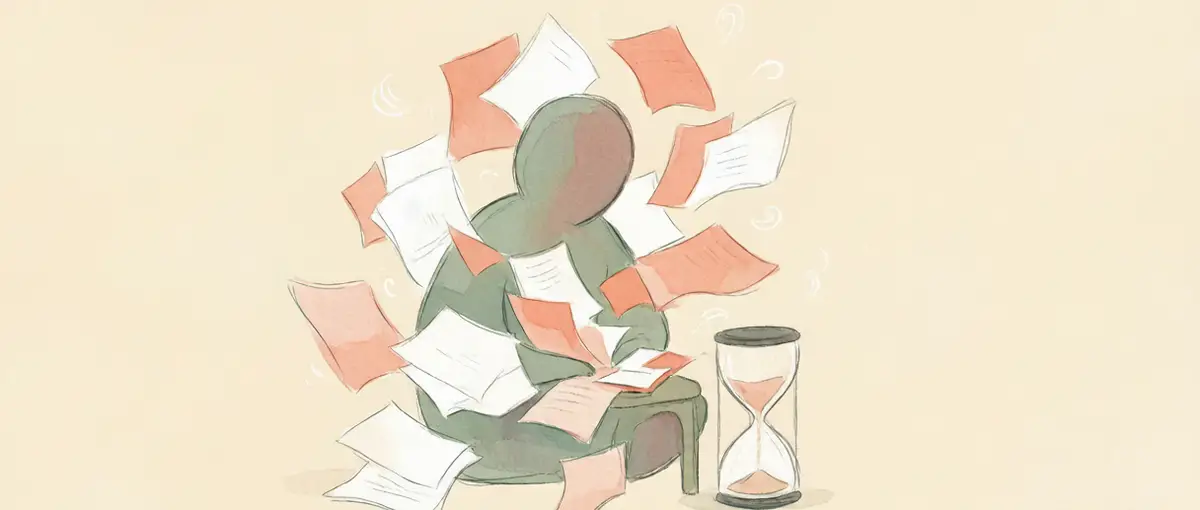
Do you have this habit. The work is actually done, yet you won't close the laptop; when a coworker walks by, you flip back to a screen that looks busy. Someone asks for progress in the group chat and you reply faster than anyone, adding "still pushing." Not because you truly have that much left, but because you can't let others think "you don't seem to have much going on."
When did "busy" become a stand-in for "valuable"?
You've probably figured out the unspoken rule: a person's worth is often measured not by what they produce but by how busy they look. Sitting quietly to think reads as zoning out; leaving on time reads as not committed. So you made "being seen in motion" your source of safety. As long as the screen is dense and replies are instant, you're still the "reliable one." But you can no longer tell whether you're working or performing work.
Is it criticism you fear, or being unnecessary?
Deeper down, you may fear not criticism but being overlooked. In a place that treats busyness as virtue, the unbusy feel surplus to requirements. Subconsciously you believe: the moment I stop performing, others will see that not that many people actually need me. That panic of "not being needed" is more draining than the overtime itself. So you'd rather keep spinning than risk the "maybe I'm replaceable" thought.
Stillness isn't useless
Yet you know the truly important things often require stillness. A good plan is thought out in quiet, not typed out; a key call comes from a few minutes of stopping to look. The most valuable work often looks, on the surface, "not busy." Wrapping yourself in busyness squeezes out exactly the part that creates value — because you left no blank space for deep thought to sit.
How do I stop feeling like I have to look busy?
Describe the outcome or problem you are working on instead of displaying constant motion. If the work is finished, close the laptop or take the thinking time you need. A visible pause is not evidence that you are unnecessary; it can be part of producing careful, valuable work.
Why do I feel guilty when I am not busy at work?
You may have learned to use busyness as proof that you belong and contribute. When the screen goes quiet, that proof disappears, even though your value did not. Keep a record of outcomes and decisions rather than hours of visible activity, and let that evidence replace the performance.
Want to understand why stillness feels like a threat to your value?
If you keep working after the real work is done, gentle self-exploration can help you separate being useful from looking occupied.
Swap "looking busy" for "being legible"
You don't have to overturn this survival strategy at once; that's too risky. Run a small experiment: next time someone asks what you're doing, instead of "lots of things," try "I'm thinking through next week's plan." Translate "busy or not" into "what problem am I solving." Slowly you'll find that someone who can name what they're doing earns more trust than someone who only seems busy. And you, at last, can draw a breath from that endless performance.
Keep reading: Why do I keep counting the hours till quitting time · Why do I start dreading Monday from Sunday night? · Why do I feel guilty for enjoying anything at work
Written and reviewed by DustEcho Editorial for self-reflection and cultural inquiry—not counseling, medical advice, or a clinical diagnosis.
Not sure where to begin?