Why do I feel exposed when I do well at work?
DustEcho Editorial
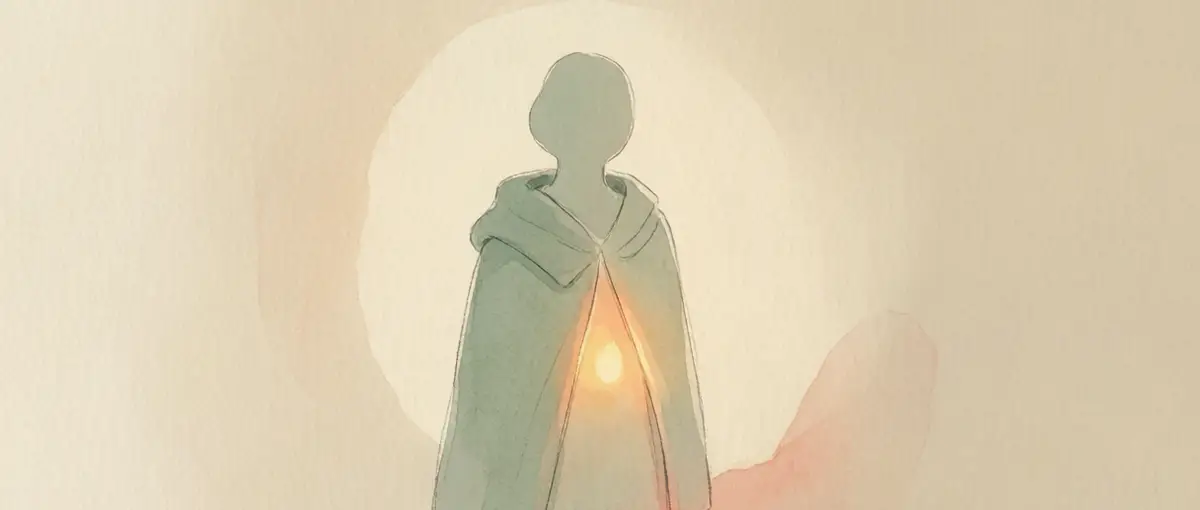
You grinded for weeks and finally pulled that project off; your boss named you in a meeting and praised you. You should be happy, but your chest goes itchy: everyone's looking at me now, what if next time I can't?
What you fear isn't being scolded; it's being seen. Doing well isn't glory to you — it's being pushed under the light. The light comes on and you're spread open, even the clumsiness you usually hide can't hide.
This tangles with "am I good enough." There's a draft in your mind: I'm actually no good, this time was just luck. The moment you're seen doing well, the secret "I'm actually no good" is in jeopardy — others will think you've always been capable, but you know it was the exception. You're afraid of being found out someday, and more afraid they'll realize you were "faking" before too.
So you have two opposite moves: on one side you do the work well, to prove yourself; on the other, the instant you're seen, you yank back. Praised, you first smile, wave it off, then add "it was all the team." Not that you're fake — you need that add-on to cast a little shadow back over the spot just lit up.
At bottom, you haven't yet linked "being seen" with "safe." You're used to feeling solid only in the dark; the bright place means being inspected, expected of, compared. But at work, being seen doing well is good news — it earns trust, more responsibility, and the footing to talk terms.
Try re-reading "being seen." Next time you're praised for a job done well, don't block it right away. Let the words rest on you for three seconds — no reply, no denial. You'll find the light isn't that hot, and others aren't necessarily holding a magnifier to find your cracks.
Practice from small things: thanked in a group chat, reply a plain "thank you," no "it was nothing." Liked in a meeting, just nod, don't immediately push the credit away. Every time you don't block the light, you're telling yourself: I did well, I was seen, and I didn't collapse.
Someone will say, isn't staying low-key safer? Yes — over-the-top spotlight is annoying. But your problem is treating even normal visibility as danger, so a little light appears and you leap to extinguish it yourself. That's not low-key, it's fear. The difference: low-key is a composure you choose; fear is an instinctive dodge. Keep that composure, but try, just this once, not to switch the light off the moment you're seen.
The real turn may be this: once you stop reading "doing well" as exposure and start reading it as proof your ability was there all along, the light stops stinging. What you did is worthy of being seen; and being seen is only the natural result of that.
You don't have to like being watched right away. Just start with "not dodging." When praised, don't immediately add a humble line; when thanked, don't push it away at once — that already practices catching the light a little. Once you catch it steadily, you'll find there is wind under the light, but it's not cold. Because you finally believed: you stand there on what you did, not on luck, not on acting. Others seeing you do well isn't your flaw; it's your evidence. Next time "it was all the team" reaches your lips, swallow it for three seconds first — give the you who actually did well a bit of time to be seen. It's not long, but enough to re-read "being seen" as a good thing.
What you did sits there; others seeing it is the most ordinary echo. Don't rush to block the light, and don't rush to shrink into the shadow. Stand in the light a while, and you'll find you can stay steady there too.
How do I stop feeling exposed when I do well at work?
Let the recognition remain specific: "I delivered this project well" does not mean "I must now be perfect forever." When praise arrives, say thank you before explaining it away, and separate a future expectation from the evidence that you handled this work.
Why does success make me anxious at work?
Doing well can make you more visible and bring imagined scrutiny to the surface. If your mind treats visibility as danger, even positive attention feels like a test. Practice staying in the light for a few seconds longer and let normal professional recognition be ordinary.
Want to understand why being seen feels unsafe?
If you hide the moment your work is noticed, gentle self-exploration can help you receive visibility without turning it into a threat.
Keep reading: Why do I always feel like I'm faking it at work · Why Do I Feel So Uncomfortable When Someone Praises Me · Why do I hate asking for help at work
Written and reviewed by DustEcho Editorial for self-reflection and cultural inquiry—not counseling, medical advice, or a clinical diagnosis.
Not sure where to begin?