Why Do I Always Doubt My Own Decisions
DustEcho Editorial
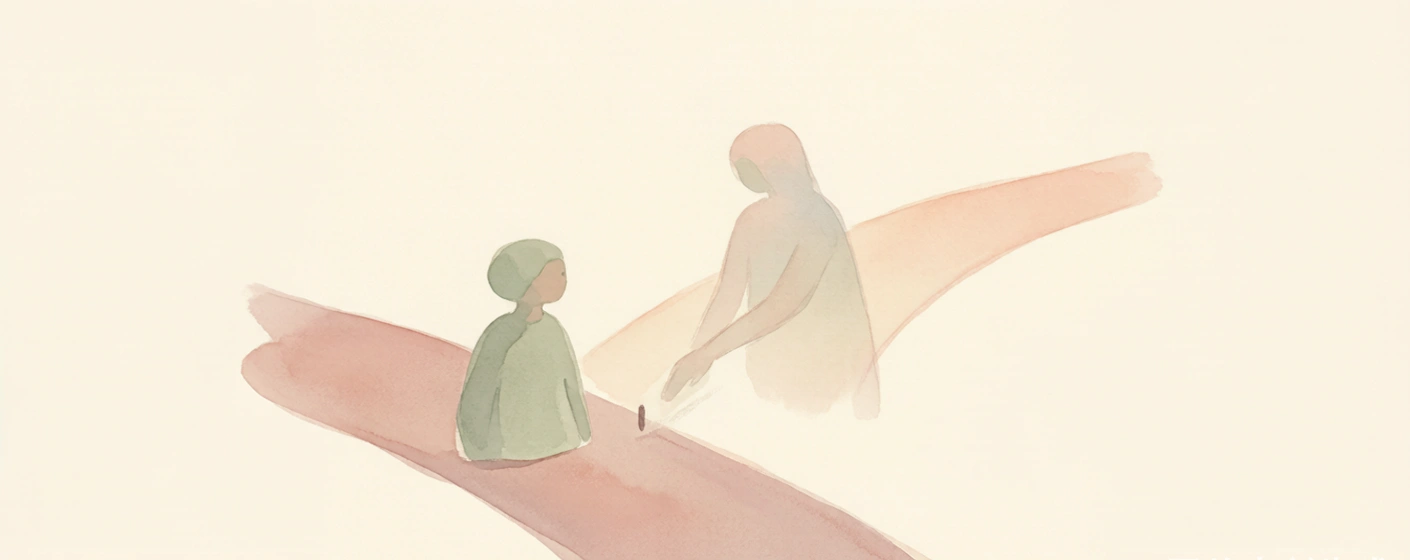
You've probably had this experience: the very second you hit "place order," unease creeps in — should I have picked the other color? Was that store a better deal? You were so sure a moment ago, and the moment it's settled, the certainty dissolves.
It's not just shopping. Changing jobs, ending a relationship, saying yes to an invitation, even just deciding where to go on the weekend — whenever you're the one who made the call, a voice shows up afterward: are you sure? What if you chose wrong?
That "let me think again" voice always arrives after the decision
Interestingly, this voice rarely appears before you decide. You may have gone back and forth, but at the moment of commitment you were oddly clear. The trouble starts with "after" — once the decision becomes fact, the late-shift reviewer clocks in.
It lays the already-chosen path back out, item by item, and asks: did you really think this through? Would the other option have been better? So something already closed gets flipped back onto the table. You're not choosing again; you're judging the version of yourself from a moment ago using hindsight.
What you doubt is often not the decision itself
Lay those loops out and a pattern shows: what unsettles you usually isn't the "A or B" question, but "do I even have the right to decide this for myself?"
Some people were rarely asked "what do you want" growing up. Big things were decided for them; small things drew "you don't understand." Over time, deciding for yourself became foreign, suspicious. So the moment you choose, the voice reflexively jumps in: you? Really?
It isn't watching whether the option is right or wrong — it's reacting to the fact that you dared to choose at all.
The bigger the decision, the harder it is to trust it was yours
There's a counterintuitive part: tiny decisions are easy to forgive yourself; the bigger, life-shaped ones are the hardest to close.
Because the stakes look higher, and you already distrust your own judgment, you unconsciously reach outward for evidence — asking every friend, scrolling every thread, confirming "what would others do." By the time you actually decide, the feeling isn't "I chose," it's "everyone said it's fine, so it must be okay."
But if it goes sideways, no one carries it for you. You still do. After all that circling, you still haven't learned the one thing: trust that the person making the call was you.
What you're afraid of is having to own it if it's wrong
Underneath the doubt is a very real fear: if I chose wrong, I eat the consequence alone.
We were trained early that mistakes get punished, but rarely taught that a mistake can also be information. So you quietly upgrade every decision into a verdict — one wrong turn and it means "you're not good enough." When you equate a single choice with a judgment of your worth, no decision feels light enough to make.
But look back at those "wrong" choices — most weren't the ruin you imagined. They read more like signposts, pointing where the road didn't go, not stamps declaring your life over.
You could try treating a decision as practice
No need to force yourself into "the decisive one" overnight. Start with one small move: after you decide, resist the urge to immediately check "would the other have been better," and let it sit for half a day. You'll find most of the unrest is habit, not truth.
You can also give that reviewer a concrete job: it may only think things through before the decision, not reopen the case after — unless genuinely new information appears that you didn't have then. Box the second-guessing into a defined window, and it stops being background noise around the clock.
In the end, doubting your decisions is often less about being bad at choosing and more about not yet being used to trusting that the one who chose is you. Next time that voice shows up, maybe answer it gently: I chose this. I'll see where it takes me first.
Written and reviewed by DustEcho Editorial for self-reflection and cultural inquiry—not counseling, medical advice, or a clinical diagnosis.
Not sure where to begin?