Letting Go: The Relief of an Open Hand
DustEcho Editorial
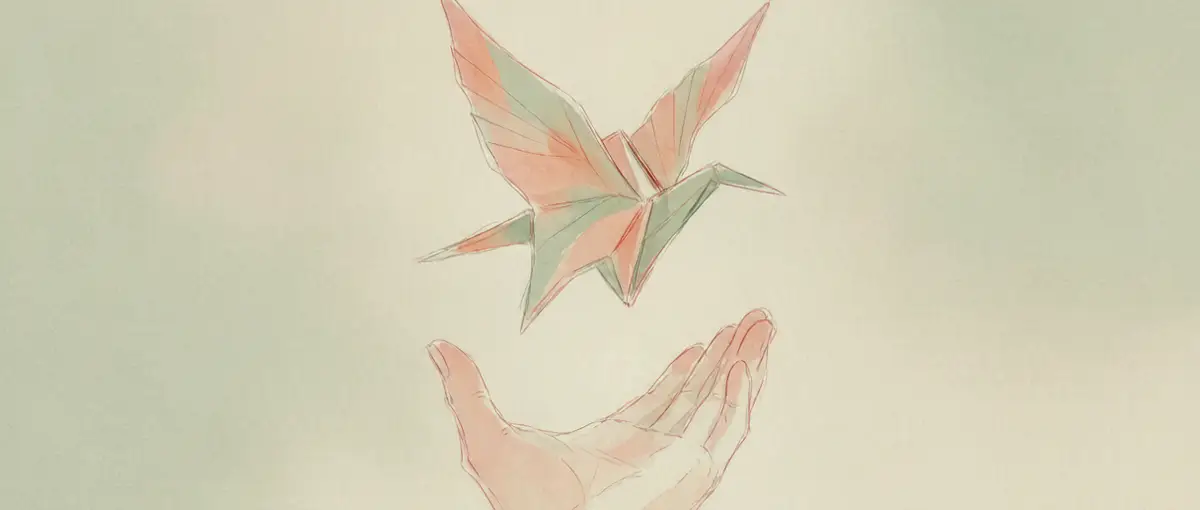
The heaviest thing on moving day wasn't a box. It was that bag of old things I might need someday. I held it, hesitating, for ten full minutes before finally letting it go. The moment my hands were free, my shoulders felt impossibly light — so light it seemed almost fake. A lot of what sits in our minds is the same way. We don't have trouble releasing things; we have trouble releasing the thought of what if.
This is the Buddhist idea of 放下 — fang-xia, letting go. Not throwing away what matters, but loosening the grip on what you are clenching that no longer serves you: an old grudge, the need to be right, the quiet story that you are not enough. The practice isn't about becoming empty. It's about opening the hand so something real can finally be received.
What We Carry Isn't Only Stuff
What we collect in a lifetime isn't only objects. A relationship that should have ended long ago. A self-assessment that was never worthy of you. A casual dismissal someone tossed off three years back. All of it is still in our pockets, coming along every single day. Is it heavy? Of course. You've simply grown used to the weight and started to believe life was supposed to feel this dragging. Letting go begins with admitting you've been carrying something all along — not with pretending you were ever light.
In the Buddhist framing, this weight is 執着 — clinging, the habit of grasping. The teaching doesn't say the things you hold are bad. It says the clinging itself is what tires the arm. You can love someone and still loosen your grip. You can honor a memory and still put it down for the night.
The Hardest Thing to Let Go Is the "Should"
The hardest thing to release is the should. You should be married before thirty. You should make everyone happy. You should swallow your grievances to prove you're mature. These shoulds are invisible backpacks — you never chose to put them on, yet you've worn them for years. Letting go isn't lying down and giving up on effort. It's seeing clearly which shoulds were slipped onto you by other people, and then setting them down gently. You're not ignoring good advice. You're finally learning to tell the difference between counsel that fits and shoes that were always meant to pinch.
You Only Feel the Weight of Clinging When You Loosen Your Grip
The weight of clinging is something you only notice once your hand opens. You hold a draining relationship tight, telling yourself this is loyalty, until the day it's forced apart and you realize — breath was always allowed to be this easy. It wasn't the relationship that was heavy. It was the tension of a fist that refused to open, the muscle you kept clenched. A lot of pain is manufactured by your own grip, not delivered by the situation itself.
This is why the relief is so surprising. You expected loss, and what arrived was lightness. The Buddhist path names this again and again: suffering eases not because the world changed, but because the hand did.
Let Go of One Thing, and a Little Space Opens
Let go of one thing, and a little space opens. What you free up isn't a vacuum — it's room. Room for a kinder line of dialogue. Room for a more relaxed version of yourself. Room for a mistake you no longer replay on loop. Life isn't better the more tightly you pack it. It's better the more alive the space you leave. An empty drawer isn't waste; it's a place held for what hasn't arrived yet.
Letting Go Is Not Giving Up
Between letting go and giving up sits a single word: active. Giving up is collapsing, throwing away what matters too. Letting go is choosing to loosen — sorting out what's unimportant, what drains you, what's expired, and setting each piece down to make room for what matters. One is loss. The other is clearing. Giving up leaves you empty. Letting go leaves you light. Until you can tell those two words apart, you won't dare to actually open your hand.
It's a Practice You Do Every Day
This isn't one big event. It's a practice you return to daily. Today, let go of the anxiety over that unread message. Tomorrow, let go of chewing on the thing you said wrong last night. The day after, let go of the script about how others see you. Each loosening is tiny, but stack them up and your whole being grows lighter by an order of magnitude. Letting go isn't some sudden enlightenment. It's daily homework — like dusting the warehouse of your mind on a regular schedule.
The Face We Refused to Lose
There's one more thing that's nearly impossible to put down: face. Insisting you're right when you're clearly wrong. Saying you're fine when you're exhausted. Staying when you should leave, because it's been so many years already. Face is like a coat that never fit but you refuse to take off — take it off and you're afraid someone will see you; keep it on and it strangles your breathing. Letting go of it isn't humiliation. It's finally daring to put back on the comfortable self that was yours. The moment you loosen your grip on face, you can actually breathe.
One Small Loosening You Can Try Today
Here's a loosening you can try today: pick one thing you've been gripping lately, and in your mind say, I'm not handling this right now. Not solving it — just taking your hand off it for a moment. You'll find that most things, the instant you let go, stop chasing you so urgently. Unresolved doesn't mean it must be solved this second. Let your hand drop; the thing is still there, but you get to breathe first.
Information Deserves Clearing Too
What clogs the heart isn't only old objects and old relationships. It's also the information you scrolled through all night and kept nothing from. The trending topics. Other people's excitement. The comparisons that leave you anxious for no reason. Held in your palm, they're weight too. Letting go includes turning off the tap now and then, letting the mind go empty. You don't have to know everything. The attention you clear out is the only attention that can hold your own life.
What does letting go mean when something still matters?
Letting go can mean releasing the demand that the past become different, not pretending the loss was unimportant. Keep the lesson, boundary, or love that is still useful; loosen the grip on the part that keeps taking today from you.
How can I start letting go without forcing closure?
Choose one small object, thought, habit, or expectation to set down for a day. Notice the space it creates before deciding what comes next. If grief or attachment feels overwhelming and does not ease with time, a qualified professional can offer support.
Want to understand what your grip has been protecting?
If release feels like betrayal or surrender, gentle self-exploration can help you distinguish care from clenching.
After You Let Go, Things Come Into Focus
Here's the interesting part: you think you see clearly only by gripping hard, but usually it's the opposite. Clutch an old grudge and you read every new person as an enemy. Carry the need to prove yourself and you hear every kindness as charity. Loosen those few things and what's in front of you returns to its true shape. Letting go doesn't make you blind. It cleans the lens.
Leave a Drawer for Memories
Letting go isn't deleting. Some things you don't need to carry every day, but you can fold them into a drawer — open it now and then, look, then close it. A relationship that ended but was genuinely good. A project you gave your all to that still didn't work. They don't have to be thrown out; they just shouldn't occupy your hands. Leaving a drawer is dignity. Occupying your hands is drag.
Letting Go Is Not Forgetting
Some people fear letting go because they're afraid that once they open their hand, nothing will be left. That's not how it works. Letting go is taking your hand off it — not erasing the memory. You still remember how that road was walked; you just stop wearing those blister-causing old shoes every day. To remember is to give thanks. To carry is to be burdened. Keep those two separate and you can finally walk a new road.
It Lets Relationships Breathe
A lot of relationships aren't broken; they're smothered by being held too tight. You check every day whether the other person still loves you. You scroll the chat history hunting for evidence. And that relationship starts to smell of your sweat. Let go of that anxiety; leave each other a little space where you're not being watched, and the relationship can breathe again, slowly warming back up. Opening your hand isn't not caring. It's giving the relationship a way to live.
Making Room for What's New
When a drawer is stuffed full, anything new can only pile up at the door. The heart is the same. You hoard every grievance, every old score, every if only — and the new joy has nowhere to land. Setting down a few old things isn't a loss; it's clearing a place for the joy that hasn't come yet. Empty isn't poor. Empty is ready.
Letting Go Unties You
You think not letting go is strength, but not letting go is tying yourself to an old post. The rope cuts deeper the longer it sits — not because you're loyal, but because you've forgotten you can untie it. The moment you let go isn't a betrayal of the past; it's finally agreeing to unbind yourself from the post and walk somewhere else. Staying tied and motionless isn't keeping watch. Walking away and still looking back — that's what real release looks like.
It Doesn't Deny That the Past Was Real
Letting go isn't insisting that none of it was real. That love was real. That effort was real. Letting go only means you stop using them as today's shackles. Admit the truth and you can let go cleanly; let go while still cursing and you're still gripping. The way you make peace with the past is to first acknowledge it truly happened, then gently loosen its hand.
In the end, letting go isn't losing. It's clearing. The hand you free up will, sooner or later, catch what was truly meant to come.
Keep reading: Dependent Origination: You Were Never an Island · Bianyi: What You Thought Was Nailed Down Has Been Moving All Along · Buyi: When Everything Turns on You, Something Ought to Stay
Written and reviewed by DustEcho Editorial for self-reflection and cultural inquiry—not counseling, medical advice, or a clinical diagnosis.
Not sure where to begin?