Ziwei Qisha: The Courage That Leads the Way Into Paths Not Yet Walked
DustEcho Editorial
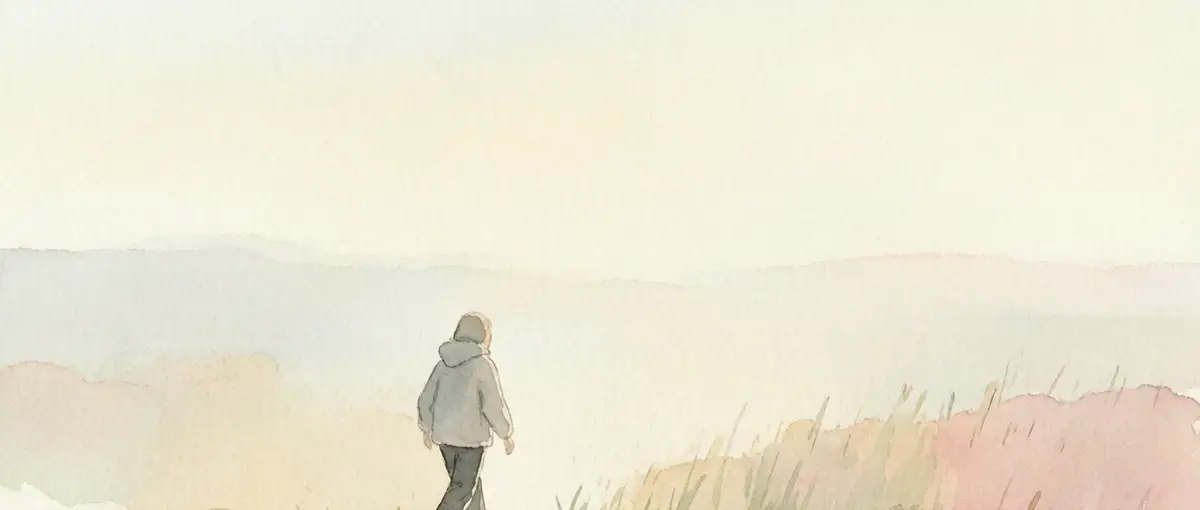
Ziwei Qisha describes the kind of person who, while everyone else is still studying the map and weighing the risks, has already set a foot toward the place with no path. Not unafraid — but compared to standing still, you can't bear the regret of "it could have been." On a weekend you spot an alley you've never walked, and you turn into it; in the company, the hard bone no one claims, you quietly take it. There's a restlessness in you that keeps reaching forward.
What does Ziwei Qisha mean in Zi Wei Dou Shu?
Ziwei Qisha is traditionally read as a symbol of initiative, courage, and the urge to open a path where none is ready-made. In everyday life, it can describe someone who moves quickly toward uncertainty and needs to pair boldness with a way to protect what they are building. It is a reflective lens, not a prediction of risk or success.
How can I be brave without rushing past everyone?
Ask whether you are moving toward something meaningful or simply escaping the fear of being left behind. Set a floor for major decisions, slow enough for others to stay with you, and explore the pattern gently before turning courage into an all-or-nothing bet.
What Ziwei Qisha Is?
In Ziwei Dou Shu, Qisha is a star that dares to charge, dares to break, dares to create; paired with the stature of Ziwei, it becomes "the courage that leads." Brought into life, it speaks of an impulse to pioneer: you're not satisfied with walking a ready-made road smoothly — you want to open a new one. Others seek stability; you seek "making it happen." You don't love risk itself; you can't bear for days to be lived as copies — that repetition of "waking up the same every day" is harder for you to endure than failure.
Its Two Sides
The good side is that you really can get things done. The project no one dares take, you take; the market no one goes to, you go; cold starts, zero-to-one, these things move you more than anyone — as if someone were pushing from behind. You give those around you a confidence of "if he's there we can get through," and in a team you're often the one who turns "can we?" into "already doing it." But the dark side is clear too: you charge so fast you often haven't counted the way back, and only when you fall do you find yourself suspended in air; you find others slow, and the team struggles to keep up; the moment something shows a glimmer you want something bigger, so you rarely sink deep into one thing — like someone always digging wells but never striking water in any.
In Relationships
In relationships you carry this charge too: when you like someone you pursue, when you're sure you commit, no playing at ambiguity — so cleanly that the hesitant stare. You make people feel lit up, pulled forward; with you, days are rarely boring. It's just that you're used to "charging forward" and sometimes miss the other's rhythm of wanting to pause, to take it slow; you also easily treat a relationship as another target to take, forgetting a person isn't a project and can't be measured by a schedule. What's most moving about you is being willing, for one person, to dare to live a different way — not just charging ahead alone.
With Money
In money, Ziwei Qisha leans "offensive." You dare to bet, dare to switch tracks, dare to move first while others watch — when opportunity comes you're faster than anyone, like a hunter catching the wind. This lets you catch the upside sometimes, and also makes you fall harder than anyone when your judgment misses — you bet hard, you lose hard. What you need isn't to pull back, but to pair "charging" with a little "waiting": leave a way back before big moves, draw a line for your principal, so boldness doesn't become a single all-in throw. Charge with a floor, and you charge longer.
At Work
You're a born pioneer: new business, new region, the hard bone no one touches — hand it to you and it lives. Superiors value your daring to fight, colleagues respect your daring to step up; the moment you stand there, a lifeless meeting breathes again. The hard part is "holding": once you've opened the frontier you easily grow bored, hand over impatiently, leaving a mess for others to clean; you're good from zero to one, not from one to a hundred. Learn to give some of your charge to settling in, so what you've created truly takes root — your value shifts from "daring to charge" to "charged and can also hold" — that's the position no one else can replace.
How to Live With It
That courage is your gift; don't lose it. Just before you charge, ask yourself: is this a road I want to open, or am I just afraid of being left behind? Leaving an alternative for important things isn't shameful; when leading others, slow half a beat so the line can keep up — don't leave your companions in the dust. When you charge out, you needn't have no one behind you — call out, and someone will want to follow. You don't have to be the vanguard every time, but you can charge with more method each time, refining lone bravery into bravery with backup.
In Closing
Ziwei Qisha isn't "reckless" — it's a courage that refuses to live life as a copy. As you walk forward, remember to look back now and then, to see whether your fellow travelers are still there — with someone following, your road wasn't opened for nothing, and the wilderness you charged through will have someone to remember it for you. Many dare to open new roads, but few will turn back to wait. If you're among the few, you needn't rush to run the whole distance alone.
A Modern Psychological View
This drive of "wanting to open a new road," in Ziwei Qisha, sits close to these states of mind:
Written and reviewed by DustEcho Editorial for self-reflection and cultural inquiry—not counseling, medical advice, or a clinical diagnosis.
Not sure where to begin?