Zheng Cai in BaZi: Money, Work, and Steady Security
DustEcho Editorial
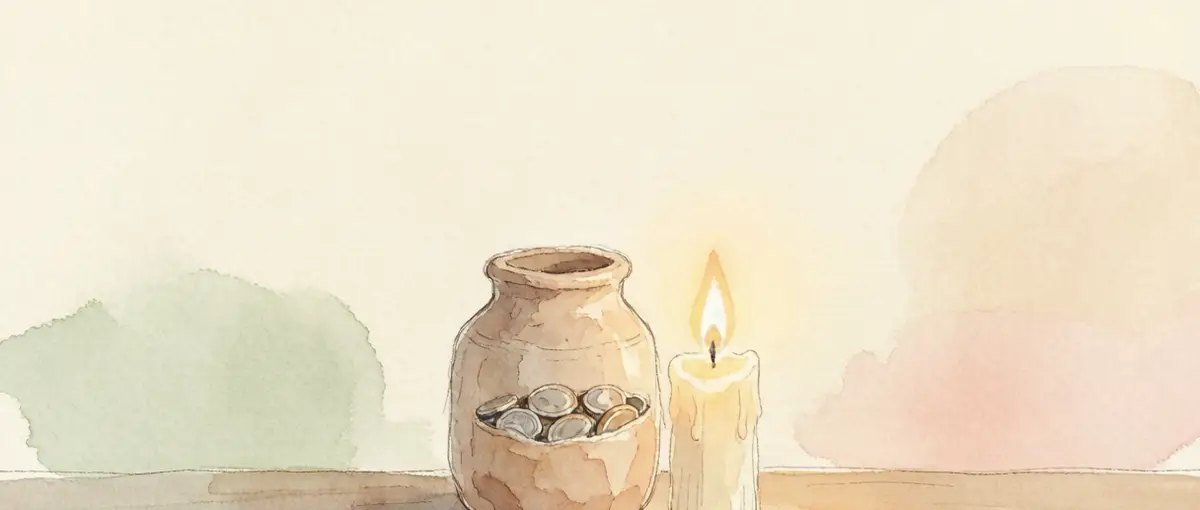
In BaZi, Zheng Cai — Direct Wealth — describes a steady relationship with money, work, and responsibility. It is the pattern of earning through clear effort, choosing practical security, and showing care through reliable action. It does not promise wealth or predict a financial outcome. It gives language to the person who wants to build a life that feels safe enough to stand in.
Some people earn money the way you drop beans into a jar, one at a time. Not fast, but reassuring. Every month when the salary lands, he first pays the rent and utilities, sets aside some savings, and only then dares to spend what is left. Not stingy — he simply needs to "see the bottom" to feel safe.
In fortune-telling terms, this kind of person is called "Zheng Cai" (Direct Wealth).
What Zheng Cai Is?
Zheng Cai is not "having money" — it is a way of relating to money: earning steady returns through steady labor and clear exchange. It does not chase an overnight turnaround, nor gamble on some opportunity whose whereabouts are unknown. Its underlying color is "real" — real work, real value.
You probably know someone like this: works diligently, salary may not be high, but never panics; saves what should be saved quietly, pays what should be paid on time; compares prices before buying, not to be cheap, but because "money should be spent where it counts." He may not talk about financial management, but his household accounts are always clear.
The satisfaction of a Zheng-Cai-heavy person comes from "slowly building life steady, bit by bit." This is a very quiet kind of strength.
Its Two Sides
On the bright side, Zheng Cai is a reliable backbone. Such a person — friends dare entrust him with things, partners dare hand over the accounts, bosses dare assign him work. He may not be dazzling, but standing next to him you feel "this matter is in good hands."
The shadow also lives in the "real." Too-real people easily turn life itself into a ledger — every cent must be accounted for, even the give-and-take in relationships must be tallied. When he occasionally wants to treat himself, a voice inside says "not worth it." It is not that he does not deserve it; he has simply grown used to putting "need" before "want," and over time the "want" part goes silent.
Another layer: Zheng Cai fears risk. Not lacking courage, but "stability" for him is not a strategy — it is safety itself. Once a hole of uncertainty appears in life, he panics more than anyone.
In Relationships
A Zheng-Cai-heavy person loves concretely too. He is not good with pretty words, but you will find that when you need it, he has covered the rent for you, arrived first for your move, quietly bought the medicine when you were sick. His care is written out, stroke by stroke, through action.
But "real" can also become an invisible ledger. He easily keeps a silent tally in relationships: how much I gave, how much you returned. Not to scheme, but a kind of grievance — "I have been so good to you, how could you" — grows quietly. What he needs to learn is to close the ledger: some kindness, once given, should not be recorded.
He also often does not know how to receive others' kindness. When someone gives him an expensive gift, his first reaction is "too lavish, please do not next time." Not unmoved, but the words "I do not deserve this" weigh especially heavy in his heart.
On Wealth
This is Zheng Cai's home turf.
His attitude toward money is respect and cherishing, not greed. Salary, savings, steady cash flow — these are the source of his security. He is willing to do ten parts of work for one fair reward; also willing to spend a little less today for tomorrow's stability.
He will not touch what he does not understand. Stocks, crypto, the "sure-win" project a friend pulls him into — he instinctively steps back half a pace. Not stupid, but "I only earn the money I understand." This restraint keeps him from wild swings.
But the shadow is here too: sometimes he turns "saving" into "daring not to spend." He hesitates when he should invest in himself, feels guilty when he should enjoy. Money was meant to be a tool for a better life, but occasionally becomes the rope that binds him.
At Work
The Zheng-Cai type is the steadiest brick in an organization. Tasks assigned to him, he does thoroughly; how the process goes, he guards it well. He is not good at parachute-style speculation, nor fond of betting on an uncertain trend, but he has taken "doing the task at hand well" to the extreme.
This kind of person suits roles that need accumulation and settling: finance, operations, craft work, relationship-based business needing long-term trust. His promotion usually comes from years and reliability, not one dazzling performance.
The hidden risk: when the environment calls for "be a bit bolder," he gets stuck. Not lacking ability, but the phrase "steady is always right" weighs too heavy in his heart.
How to Get Along With It
If you are a Zheng-Cai-heavy person, try two small things:
One: give some budget to "want." Each month, outside the ledger, keep a sum of money "purely because you like it" — buy a bouquet, eat a good meal, for no reason at all. You will slowly discover that spending can also not be consumption, but life itself.
Two: practice "not keeping accounts." Those efforts in relationships, once given, let them pass. Truly stable relationships are not tallied out, but won by both sides being willing to occasionally take a loss.
In Closing
Zheng Cai is not rustic — it is a way of gripping life in your hand. This world keeps urging you to be fast, to gamble, to turn it all around in one move, but there are always those willing, like dropping beans into a jar, one by one, to build days into a shape they can trust.
That steadiness is itself something remarkable.
Modern Psychological Perspective
- Why do I feel awkward talking about money — Zheng Cai takes "clearing accounts and not owing favors" very seriously; bringing up money fears hurting the bond, and that awkwardness is exactly its shadow (Why do I feel awkward talking about money).
- Why don't I allow myself to spend on myself — Zheng Cai is used to saving; spending on "serious matters" feels natural, but on himself feels like slacking; this restraint deserves a second look (Why don't I allow myself to spend on myself).
- Why do I always care for others but no one cares for me — Zheng Cai loves through action and keeps a tally of giving; accustomed to caring for others, rarely cared for in return; this imbalance is all too familiar (Why do I always care for others but no one cares for me).
What does Zheng Cai mean in BaZi?
Zheng Cai, or Direct Wealth, is traditionally associated with steady earning, practical responsibility, and value exchanged through real work. It is not a guarantee of money or a verdict about someone’s character. A useful reading asks how security, generosity, and the freedom to want something for yourself are balanced in your life.
Want to understand the money and work themes in your own chart?
If this steady-hand pattern feels familiar, a personal reading can connect the traditional term to your actual work, money, and relationship questions. Start a personal BaZi reading.
Written and reviewed by DustEcho Editorial for self-reflection and cultural inquiry—not counseling, medical advice, or a clinical diagnosis.
Not sure where to begin?