Wood Element in BaZi: What It Can Mean
DustEcho Editorial
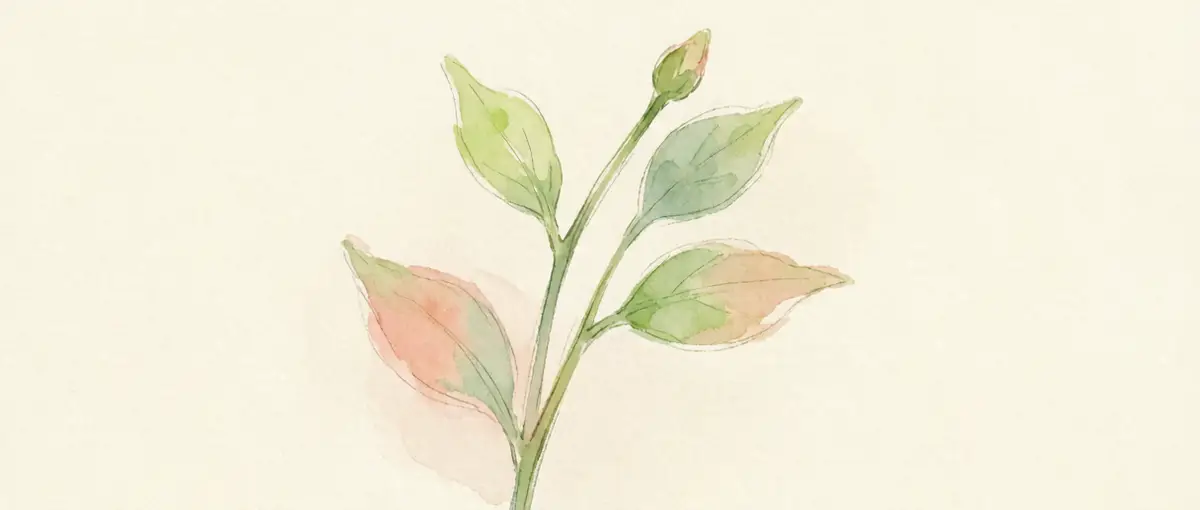
In BaZi, the Wood element can describe growth, movement, ambition, and the need to keep developing. It is not a prediction or a fixed label for impatience. Read as a warm, non-predictive lens, Wood helps name the drive to stretch toward what is next — and the work of giving that drive roots, rhythm, and sustainable progress.
Wood as a lived experience
In the Five Elements, Wood governs sprouting, free flow, and upward movement—the push of spring reaching outward. In today's life it isn't about whether you're hot-tempered or impulsive. It's a temperament bound up with "growing": you need, by nature, to move forward, to stretch, to see yourself getting better inch by inch. When a stretch of days leaves you standing still, your whole body feels wrong, like a root that can't find soil, tossing and turning all night thinking "am I wasting this?" The moment a goal shows open sky above its head, you can't sit still—you have to reach. You're not after credit. You can't bear the waste of "could have grown, but didn't." For you, a large part of feeling alive comes from "growing"—growing skills, growing relationships, growing your days. As long as you're still growing, you're steady.
Its Two Sides
The good side is that you genuinely have life force. While others are still hesitating whether to begin, you've already moved; however cramped the surroundings, you find a way out through the crack, and that resilience is something many quietly envy. You give the people around you a sense that "this can work"—on a team you're often the one who lights the mood first and holds up the direction, and when they see you step forward, they dare to step too. But the other side follows: because you need to grow so badly, you often can't hear "slow down for a second." Once you've fixed on a direction you're single-minded; when others suggest a detour you let it go in one ear and out the other. Pressed down, you rebound harder than anyone—sometimes when you should have turned, you mistook stubbornness for persistence and wall-bashing for breaking through. Only when you've grown crooked and bumped yourself sore do you realize you'd turned "I must grow" into "I must not stop," turned growth into a fight with yourself, and the harder you fought, the more exhausted you got.
In Relationships
In relationships, you're the one who pulls the other person forward with you. You plan, you arrange, you want the two of you both growing; what you fear most is a relationship stagnant like a pool of dead water, the same every single day. You give off drive and hope—with you, it's never boring. It's just that you easily wrap "for your own good" into "you have to grow at my pace": your partner wants to rest, you get anxious; a friend has no goals, you panic on their behalf; family is content where they are, and you think they're a waste. It's not control—you simply can't stand the people around you standing still, because that makes you feel pulled back, unable to grow yourself. Learn to swap "I need you to grow" for "I'm with you, but you can take your time." Only then does the relationship stop being your solo tug-of-war, and the other person stops shrinking in front of you until they don't even want to talk.
In Wealth
Wood's relationship with money is the mischief of the word "grow." You'll spend without blinking on things that "let me grow": courses, books, opportunities that open new paths—you call it investing in yourself, and it's worth it. You're also easily drawn to "the next wave," sending money toward what appreciates and expands, not fond of hoarding it dead. This gives you frequent chances to earn, and also trips you up when you misjudge a leap—you're betting on "it will grow," not "it's worth something now," and sometimes the money's gone in before the sprout's even shown, and the cash runs tight first. Leave one patch of unmoving soil for your wallet, so the drive has roots and not all your money goes to "growing." Keeping a little money that simply rests makes you grow longer, so one gust of wind doesn't blow you back to the start for nothing.
At Work
You're a born growth-type player: new business, new skills, blank space no one's touched—you're excited the moment you pick it up, more fired up than anyone about going from zero to one, as if someone were pushing from behind. Your boss values that "hand it to you and it'll grow" drive; colleagues respect that you dare to break ground. The hard part is "wrapping up": you love opening new fronts, hate closing them. The moment a project takes shape you're already thinking about the next one, leaving the mess for others to clean. You also easily clash with "play-it-safe" colleagues, finding them slow, conservative, no fun. Learn to plant roots firmly before charging, and raise this tree until it bears fruit before starting the next—your value shifts from "can grow" to "grew and held on," which is the position no one can replace or take from you, instead of being the person who only starts and never finishes.
How to Live With It
Don't push that growing force down—suppress it and you'll brood yourself sick, spinning empty night after night. Just swap "must not stop" for "grow what's worth growing": not every direction deserves reaching; tell apart real growth from anxiety pretending to be growth. When told to "slow down," don't rebound right away—pause two seconds and see whether the other person is really blocking you or just afraid you'll fall. Learn to appreciate the "not growing" times—rest isn't stalling, it's the roots going deeper, invisible to you. You don't have to shoot upward every moment, but you can grow with more method each time, refining that stubbornness into directed resilience rather than panicked scatter—the more frantically you shoot, the more likely you are to hit a wall.
In Closing
Wood isn't "stubborn"—it's life's honesty about refusing to stay in place. When you shoot upward, remember to also press your roots down—only with roots held do the winds fail to topple you, and the things you grew won't be carried off by a gust, leaving you with nothing. In this life you'll reach toward many lit directions, and you should also keep a little patience for the self that grew crooked and needs to turn back and be steadied. A tree stands tall not because it never stops, but because it knows to go up while gripping its roots; you too—be able to reach out, and be able to come back, and only then do you grow steady.
What does the Wood element mean in BaZi?
The Wood element is associated with growth, movement, flexibility, initiative, and upward development in BaZi language. A modern reading treats these as tendencies to observe, not a complete personality diagnosis. The useful question is how to keep growing without letting urgency scatter your attention or exhaust your roots.
Want to understand your growth pattern more personally?
If you are always reaching for the next thing but struggle to settle, start a personal BaZi reading to explore the pattern in context. The goal is reflection and practical clarity, not a fixed prediction.
A Modern Psychological View
This Wood impulse to "keep reaching upward no matter what" sits close to these states in psychology:
Written and reviewed by DustEcho Editorial for self-reflection and cultural inquiry—not counseling, medical advice, or a clinical diagnosis.
Not sure where to begin?