Why does my desk job leave me so drained
DustEcho Editorial
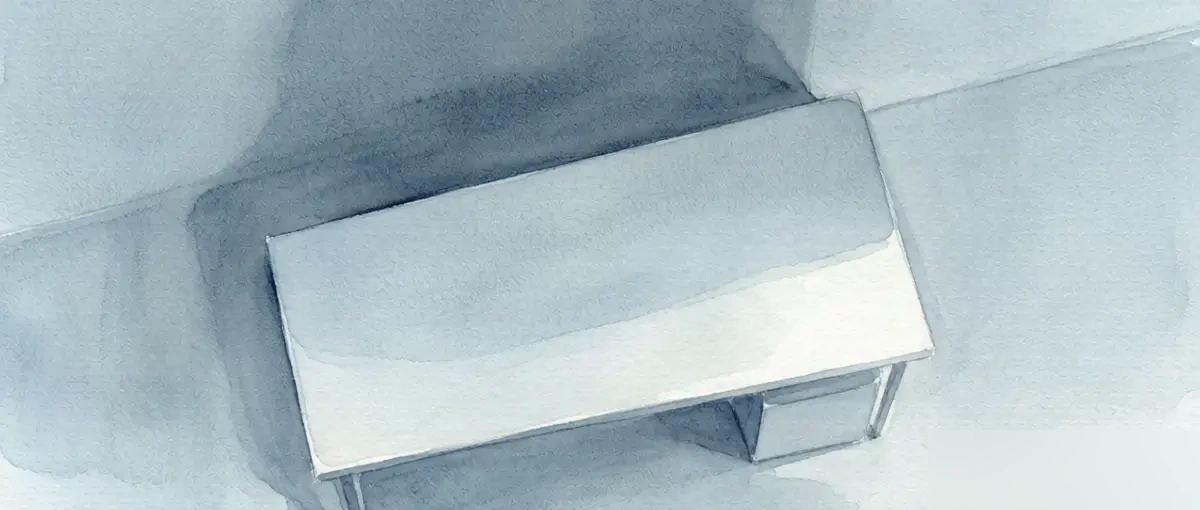
Someone asks, "you just sit there typing all day, how tired can you be?" You smile and don't answer. Because you can't quite explain it — your body did no heavy lifting, yet home on the couch you collapse, emptied out.
That tiredness isn't in your muscles. It's somewhere else, quietly draining you dry.
Not the body — something else
Your day is constant low-intensity drain: endless messages, endless small decisions, context switching on demand. None of it heavy, yet like fine sand they leak into your pocket all day. By the time you notice, it's too heavy to walk.
Physical labor tires in the moment; this tires in "it never stopped." Move bricks and a night's rest repays your muscles; sit at a desk and it's an invisible slope — each step not steep, yet by day's end you're high up, and looking back your legs give out.
The invisible drain is the crueler one
What costs you most is often the unseen part: swallowing impatience to stay polite, swallowing grievance to stay professional, decoding what the boss meant behind one line. Emotional labor isn't punched into the clock, yet it burns you for real.
Home, body idle, the brain still auto-replays which line you mishandled today. This "won't switch off" hurts more than moving things — that ends when you're done, but the unsaid-smoothly words, the un-caught emotions, keep turning after you lie down. Your body clocked out; the monitoring channel's still on.
Why "you don't move bricks" stings
Others use physical labor as the ruler; when it can't measure your tired, they default to "you're being dramatic." But hardship shouldn't be measured only in sweat. Holding a smile, holding your state, digesting pressure that arrives anytime — none of it's easy.
Blocked by a "what's so tiring about that," you're embarrassed even to say you're tired — but that doesn't mean you aren't. What stings is it uses a scale you're not even on, to nullify the drain you're actually living. You're not trying to out-suffer anyone; you just wanted to say you're truly empty, and got bounced back as overdramatic.
Why does my desk job make me so tired?
The drain often comes from constant context switching, decisions, emotional regulation, and availability—not just sitting. Track which invisible demands leave you depleted, then create one real offline recovery block rather than assuming more passive scrolling will restore you.
How can I recover from desk-job exhaustion?
Give your attention a genuine break from messages and decisions, then add small movement, food, water, or quiet according to what your body needs. Recovery is not a reward for looking busy. If exhaustion remains severe or changes suddenly, consider discussing it with a qualified health professional.
Want to understand what your work fatigue is carrying?
If your desk looks calm while your mind stays on call, gentle self-exploration can help you separate workload, emotional labor, and the boundaries that need attention.
Admitting it's tiring doesn't make you fragile
You don't have to prove you're "miserable enough" to deserve rest. Sitting work exhausts people too; it's not you being weak, it's that this way of working simply eats energy.
Admit "I got hollowed out today," then allow yourself real rest — no explaining, no comparing, no pushing through. An empty desk is fine; you deserve to set that extra weight down for a while. Others not getting your tired doesn't make it unreal; you don't need anyone's permission to let this breath go.
What actually recharges is "off", not "rest"
Most think flopping on the couch scrolling the phone after work is rest. But that just moves the drain to a different scene — the monitoring channel's still on, and one red notification tenses the muscles again.
The desk-job exhaustion isn't cured by more sleep; it's cured by actually switching that always-on channel off for a while. Even ten minutes — no group chats, no replies, no wondering "is it my turn." Those ten minutes aren't slacking; they're plugging a briefly severed wire into a battery that's been steadily drained. You'll find this deliberately disconnected time does more to pull you out of that hollowed-out feeling than sleeping till noon on a weekend.
Keep reading: Why do I feel relieved when a meeting is cancelled · Why Can't I Get Excited About the Things I Used to Love · Why do I make my rest into another job
Written and reviewed by DustEcho Editorial for self-reflection and cultural inquiry—not counseling, medical advice, or a clinical diagnosis.
Not sure where to begin?