Why do I feel guilty for enjoying anything at work
DustEcho Editorial
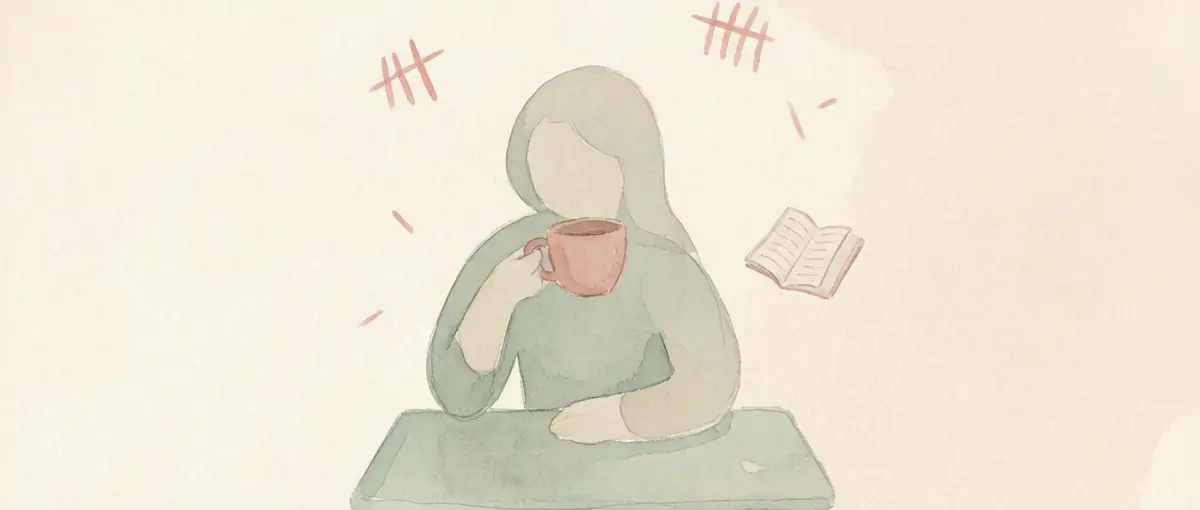
I watched an episode on my lunch break and felt a little guilty returning to my desk; a coworker told a joke, I laughed, then turned and thought: why am I enjoying myself at work? That little ease felt stolen.
Work isn't supposed to be easy
In my gut, work equals hardship, and ease equals not doing your job. The moment any enjoyment shows up at work, a voice jumps in: "you shouldn't." Like the workbench must be serious; even a smile is over the line. Even just zoning out at the window, I'd come back and "make up" for that looseness with more tension.
The absurd part: I don't even allow "finish efficiently, then feel good." Feeling good must wait until "everything's done" — and "everything" never ends. So ease is always tomorrow; today can only be taut.
The enjoyable gaps feel stolen
Slacking a bit, a good cup of coffee, small talk with a coworker — normal gaps, but I treat them as "stolen time." The more I enjoy, the more guilty, the faster I want to retreat behind that taut face. Once a lead walked past while I was laughing; I swallowed the laugh like caught doing something wrong.
Later I thought: that laugh cost nothing. But the shame was real. My body welded "enjoyment at work" to "neglect" so tightly they can't be separated.
I mixed up "serious" with "tense"
Serious is an attitude; tense is a state. I can be serious and relaxed — hands deft, shoulders loose. But I don't believe it. Not being tense means not trying; not being stern means half-hearted. So even a smile must be "repaid" with a bitterer face to cancel the cheer.
A coworker does great work while listening to music; I used to think that's "not gritty enough." Now I see: they're serious, not slack; they found their rhythm, not laziness.
Afraid to loosen, in case it all collapses
Digging down: afraid that once I loosen, I can't pull back. In my script, loosening equals sliding, sliding equals ruin. So I must stay taut, even strangling normal joy upfront, lest the crack open and won't close.
But a string pulled full always snaps sooner. My "can't stop even when tired" tiredness comes from exactly this: afraid to loosen, so always spending, until even things I like lose their pull.
How do I stop feeling guilty for enjoying work?
Allow one small, ordinary pleasure without using extra work to pay for it afterward. Drink the coffee, laugh at the joke, or take the break you are entitled to, then return to the task without a punishment ritual. Ease is not neglect; it is part of making a demanding day sustainable.
Is it okay to enjoy myself during the workday?
Yes, as long as the pause fits the expectations and responsibilities of your role. A short break can support attention and recovery rather than undermine them. Feeling guilty does not automatically mean you crossed a professional line; check the facts before accepting the old rule that work must feel painful to count.
Want to understand why pleasure at work feels undeserved?
If a smile immediately triggers self-correction, gentle self-exploration can help you make room for ease without losing your standards.
Leave a guilt-free gap
Small experiment: allow a little "unproductive" pleasure at work. Drink the coffee properly, laugh at the joke properly, don't immediately repay. It isn't theft; it's human — no one can stay taut eight hours without a sliver of slack.
Another start: move "relaxed" from negative to neutral. A serious person can have gaps; a gap isn't a hole, it's the breath that lets the string last longer. Next time you laugh, don't swallow it — let it hang two more seconds. You'll find work didn't collapse because you smiled.
If you're like this, don't scold yourself as "paid-slacker guilt monster." You're not lazy; you equated "do it well" with "not a sliver of ease allowed." Leave one guilt-free seam — even just finishing that coffee seriously, not rushing to the to-do.
Keep reading: Why do I keep counting the hours till quitting time · Why Do I Feel Like I Never Recover · Why do I feel relieved when a meeting is cancelled
Written and reviewed by DustEcho Editorial for self-reflection and cultural inquiry—not counseling, medical advice, or a clinical diagnosis.
Not sure where to begin?