Why do I rush to make sense of my feelings instead of just feeling them
DustEcho Editorial
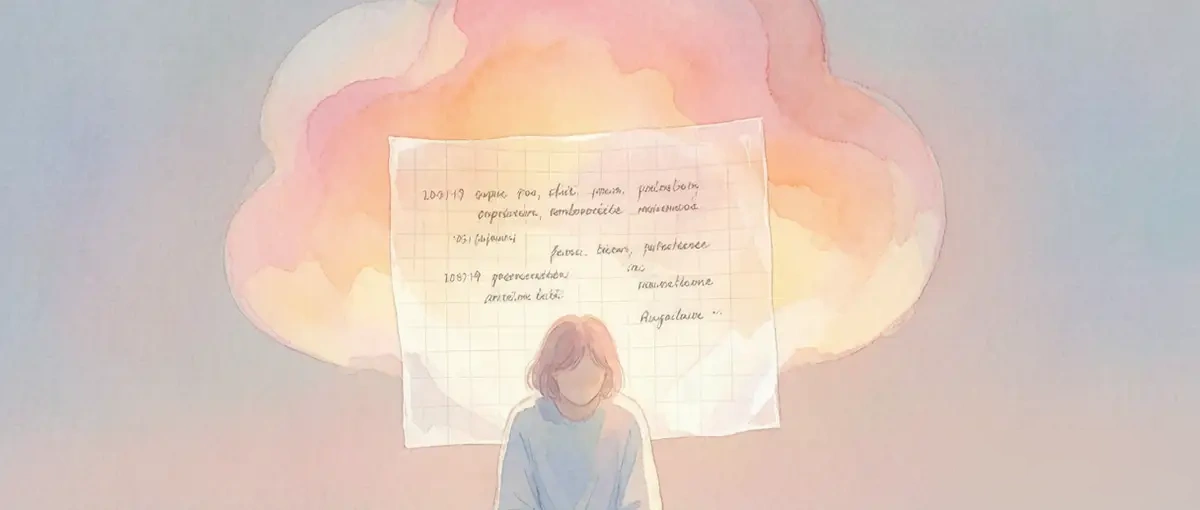
Your partner called, voice shaking, saying something had happened at home. Your first reaction wasn't a tightness in your chest — it was a row of questions popping into your head: how bad is it, should you take time off, who to contact first, when to book the ticket back. You asked them calmly, hung up, and only then froze — you hadn't actually felt bad once, the whole time.
This isn't the first time. A friend cries to you and you hand over tissues and then analyze the cause. Something terrible happens to you and before the feeling even surfaces, you're already writing the manual for it.
It's not that you don't feel — the feeling gets intercepted on arrival
A lot of people think they're "numb," but they're not. You can name what you're roughly feeling, even explain it well. The problem is elsewhere: the second an emotion rises from the body, before it can even spread, the mind rushes in and translates it into words you can understand.
It's like someone pressing something into your hand — before you can even see what it is, you pass it to the person next to you who loves to summarize. By the time you remember "what did I just receive," all that's left in your hand is a written note.
Why the mind is in such a hurry to translate
For many of us, "having feelings" equals "something's about to go wrong." If you were told "nothing to cry about" when you were sad, or "don't be so difficult" when you were angry, you learned early: feeling is trouble, and figuring it out first is safe.
So the moment an emotion appears, the mind clocks in like a guard on duty — it labels this unclear thing, sorts it, finds a reasonable cause, ideally with a solution attached. Once it's "explained," the danger seems lifted. You don't not want the feeling; you badly want to turn it into something controllable.
The more you analyze, the more you watch yourself from the side
Something subtle happens: when you get used to analyzing first, the way you experience emotion drifts into observing. When you're sad, you're sad while a voice in your head annotates "I'm sad right now, because…" When you're angry, you're angry while grading "is this heat a bit much."
It sounds clear-headed. The cost is that you're always one layer removed. Like watching a film with your eyes locked on the subtitles — you know what they say, but the moment the image was meant to move you, you skipped past it. You can recap the plot, but you were never really touched.
Some feelings don't need to be figured out first
We tend to believe something only "passes" once we've thought it through. But feelings aren't logic problems. Sadness, jealousy, grievance — often they flow through your body on their own before you've analyzed anything. If you stop them to ask "what gives you the right to show up," they get stuck, turning into a dull, unnamed discomfort.
That's also why thinking can exhaust you — you're not feeling, you're negotiating with your own feelings.
Why do I analyze my feelings instead of feeling them?
Analysis can create distance when an emotion once felt unsafe, confusing, or inconvenient. Understanding is useful, but it does not have to arrive before the feeling. Notice one body signal first—tightness, heat, heaviness, or movement—without immediately turning it into a problem to solve.
How can I stop overthinking my emotions?
Give yourself a short “no explanation yet” window. Write one sensory fact, one feeling word if it comes, and one need or next step. You can analyze later; first let the experience exist without putting it on trial.
Want to understand why thinking feels safer than feeling?
If every emotion becomes a case to solve, gentle self-exploration can help you stay close to the experience while keeping the clarity you value.
Try turning the subtitles off for a while
Next time a feeling comes, run a small experiment: don't rush to name it. When it rises, just stay there and let it sit in your chest or stomach for a moment. Don't care what it's called, where it came from, whether you should be having it.
You'll find many feelings are fine to never "get." They linger a while and dissolve on their own. And when you stop rushing to be the translator, you finally experience it for the first time — not as an audience member, but as the person it happened to.
You don't need to understand what you're feeling every single moment. Letting yourself sometimes just feel, instead of figure out, gives the feeling back to you — instead of leaving it as a note in your own head.
Keep reading: Why Can't I Name What I'm Feeling · Why Do I Feel Like I'm Not Really Here · Why Do I Feel Less and Less These Days
Written and reviewed by DustEcho Editorial for self-reflection and cultural inquiry—not counseling, medical advice, or a clinical diagnosis.
Not sure where to begin?