Why do I feel emptier after being around people
DustEcho Editorial
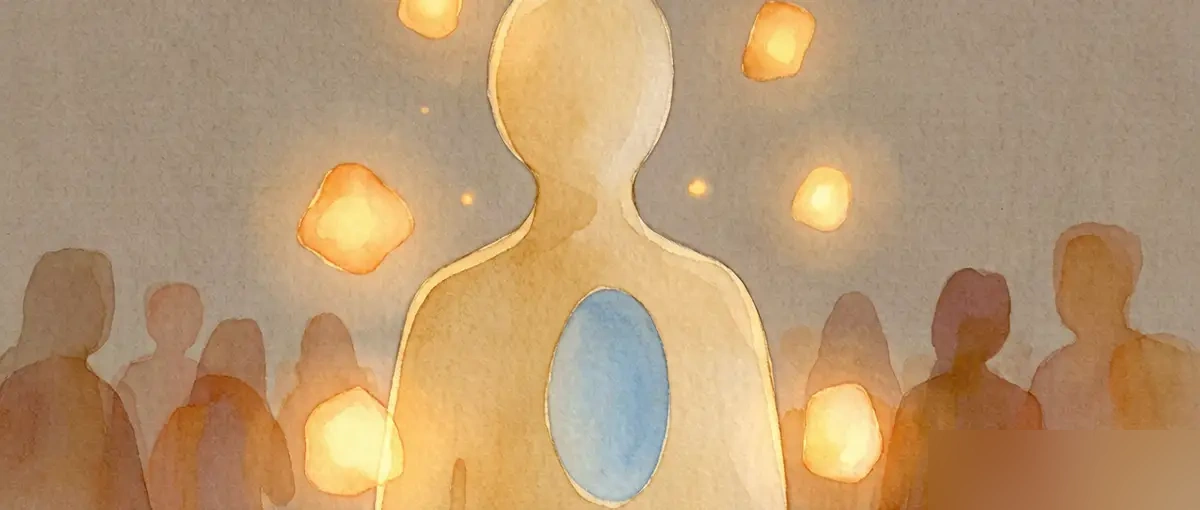
Last weekend I had dinner with a group of friends. I laughed plenty — helped order dishes, picked up conversational threads, filled awkward silences. Walking out of the restaurant the night air hit me, and that emptiness washed over.
Like those two hours of liveliness were borrowed, and now time's up — return to sender. I stood frozen at the subway entrance, unable to tell if I'd actually been happy or not.
When it's lively I'm not "empty" — I'm lent out
Many people assume this emptiness comes from being numb during socializing — nope. I'm not numb when things are lively. I'm busy doing one thing: "maintaining."
Maintaining a decent image. A presence. An atmosphere that doesn't dampen anyone's mood. Someone throws out a topic and I catch it; someone lets a silence stretch and I fill it. All my attention is outward — monitoring whether the vibe works, whether others are comfortable, whether my own performance feels natural enough.
The problem: when all my energy goes into maintaining external states, nothing remains for internal experience. It's like renting out your house — the building stands there, but the owner doesn't live inside anymore.
So that empty feeling after leaving isn't sudden arrival. It's that the "maintainer" clocked off and the room sits vacant — because the real me never actually moved in.
Emotions run on a delay because they were pushed underneath
I used to think I was heartless. Later I understood: I wasn't without feelings — they were just scheduled later in the queue.
During the热闹 they get pressed down because the task at hand is "socialize well," not "feel well." Only after people leave, quiet returns, and the job is done do those suppressed feelings slowly surface.
But what surfaces isn't the happiness from before — that's already expired. What comes up is something more raw: exhaustion, hollowness, a faint confusion — where exactly was I during those two hours?
The observer that never clocks off
What exhausts most isn't what I did — it's that observer running inside my head that never shuts down.
It's online the entire time, monitoring every move: was that remark appropriate? Did my smile look forced? Did I neglect anyone? It never lets me fully immerse in the moment — because its job is to pull me out of experience and turn me into an evaluator.
So recalling a gathering, what fills your mind is "how did I perform" rather than "what did I feel." The former is the observer's report. The latter is the actual trace of someone who lived through something.
Emptiness is that room finally going quiet after the observer's shift ends — except nobody ever really lived there.
Why do I feel emptier after being around people?
You may have spent the gathering monitoring the mood, carrying the conversation, or performing a version of yourself that felt easy for everyone else. When that outward attention stops, your own feelings finally become noticeable. The emptiness is information about how little room you had for yourself, not proof that the connection was fake.
How can I feel less empty after socializing?
Leave a quiet transition after the gathering instead of immediately filling the space with scrolling or another plan. Ask what you genuinely enjoyed, what felt effortful, and what you need now. A smaller group, a clearer limit, or one honest moment during the next gathering may help you participate without managing the whole room.
Want to understand why social connection leaves you depleted?
If you feel most absent while trying to keep everyone comfortable, gentle self-exploration can help you return some attention to yourself.
Don't rush to fill the void after leaving
Here's something I discovered: that post-gathering emptiness doesn't need to be eliminated immediately.
My old habit: the instant I left a restaurant, earphones in, phone scrolling, planning where to go next — quickly fill that hollow with anything, because sitting with it feels unbearable. Then I tried not doing this: let that emptiness sit there for a while. No social media posts, no replies, no music. Just walk a while, let the wind hit you, let the openness stay open.
Then I found: that emptiness isn't an enemy. It's what shows through after you stop performing. It reminds you — during those hours, you lent yourself out. And now it's waiting for you to collect yourself back.
Next time things get lively, could you maintain a little less? Spend less time as observer, more time as participant?
Keep reading: Why Do I Feel More Anxious When It Gets Quiet · Why do I laugh when I want to cry · Why do I rush to make sense of my feelings instead of just feeling them
Written and reviewed by DustEcho Editorial for self-reflection and cultural inquiry—not counseling, medical advice, or a clinical diagnosis.
Not sure where to begin?