Why do I hate asking for help at work
DustEcho Editorial
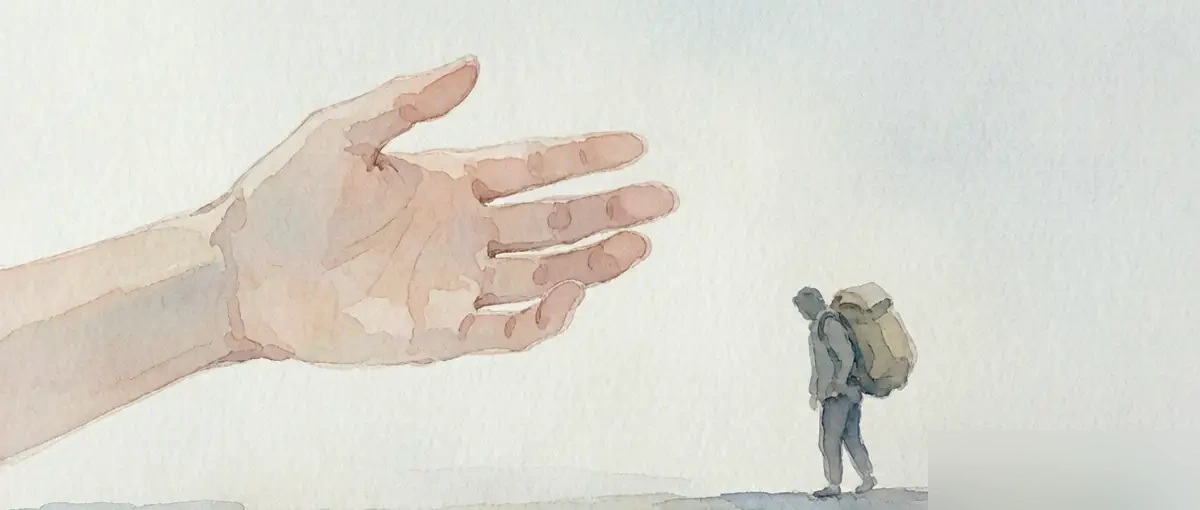
A feature's had you stuck two days; one question to a colleague would clear it. But you'd rather dig through docs, trial-and-error, pull an all-nighter than open your mouth. Not that you're afraid of bothering people — you're afraid that asking hands over a little note reading "I can't."
You don't not need people. You're afraid to let yourself "need people."
Why would you rather stay stuck than ask?
You keep a ledger in your head: independent equals reliable, asking equals showing weakness. So even stuck, you keep up the "I've got this" front. What you fear isn't the problem itself; it's the problem exposing "so you don't know everything either." In your eyes, admitting you're stuck is roughly admitting you don't deserve to sit here.
So a thing solvable in ten minutes becomes two days of lone battle. The worst part isn't the tiredness — it's that no one sees you're tired. You've hidden yourself so well that even your teammates assume you sailed through.
Where does the fear of being exposed by one question come from?
This thought was mostly raised by old experience: being scolded for asking as a kid, or having a request quietly held against you once. What you remembered isn't "he helped me," it's "he knows I'm not capable." From then on you equated asking for help with "showing people your weak spot."
More hidden still, you pre-write the other person's reaction: he'll surely think I'm incompetent, might he turn and tell others. You scare yourself off before the scene even plays. But at work, nobody actually disqualifies you for asking once. That ledger you keep is mostly written only in your own mind.
Everyone's actually borrowing strength from each other
You assume competent people never ask — that's because you haven't seen their group chats. The people who move smoothly are often the ones who open their mouths most — not because they're weak, but because they long ago pulled "asking" out of shame and made it a normal work move.
Needing someone doesn't mean you're broken. It just means this task goes faster with two than one. Just as you wouldn't secretly look down on a colleague for asking you one thing — you'd more likely think, hey, he trusts me. Put that same reading on others and you'll see asking was never a weakness exhibition.
Try putting your hand out once
Start with something small: if you've been stuck over half an hour, just ask "how did you handle this point before?" No submissiveness, no arrogance — like borrowing a thread of thought. You'll find the other person is mostly happy, even feels trusted by you.
You don't have to carry everything alone to earn your place here. Put your hand out once; the sky won't fall, and you won't be crossed off. On the contrary, that note you're afraid to hand over actually reads "I'm seriously trying to get this done." Next time you're stuck, don't rush to lock yourself away — try gently passing that question mark out once.
How do I ask for help at work without looking incompetent?
State what you tried, where you are stuck, and the smallest question that would unblock you: "I checked A and B; could you show me how this part usually works?" A focused request signals ownership. It saves time, gives the other person a clear way to help, and keeps a solvable problem from becoming hidden exhaustion.
When should I ask for help at work?
Set a reasonable threshold before you start—for example, ask after thirty minutes of genuine stuckness or when a mistake would affect someone else. Waiting until you are overwhelmed is not proof of independence. Early, specific collaboration is part of doing responsible work.
Want to understand why needing support feels like failure?
If one question feels like handing over evidence against yourself, gentle self-exploration can help you practice interdependence without losing your professional dignity.
What closes while you're hiding the weakness?
Never asking keeps the image intact on the surface, but it also severs that "we lend each other a hand" thread with colleagues. People draw close through "being needed" and "needing someone."
When you carry everything alone, no one can step in, and the relationship stalls at pleasantries. Reaching out once doesn't only solve the problem — it gives the other person a chance to get close to you. A lot of solid relationships start with one "can you take a look at this for me."
Keep reading: How to Stop Rescuing Colleagues Who Didn't Ask · Why Do I Keep Volunteering for Tasks Nobody Asked Me to Do? · Why do I feel like I have to prove myself at work
Written and reviewed by DustEcho Editorial for self-reflection and cultural inquiry—not counseling, medical advice, or a clinical diagnosis.
Not sure where to begin?