Why Do I Feel Like I Don't Deserve Good Things?
DustEcho Editorial
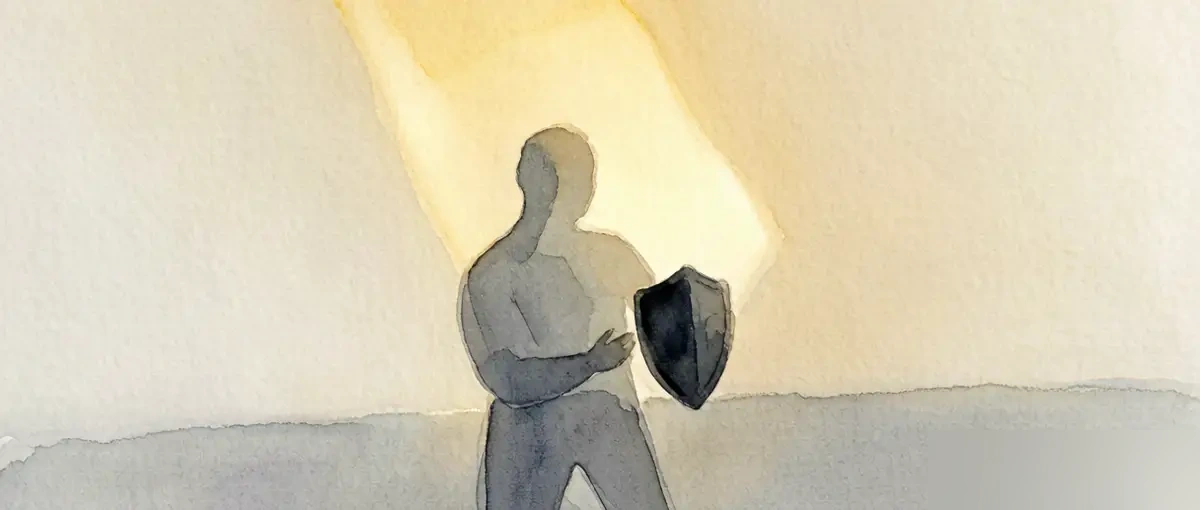
The promotion email arrived. Someone I like messaged me. A friend sent an expensive gift — good news to anyone else, but in my hands everything takes a detour: do I really deserve this luck?
The happiness lasts half a second. Then comes that hollow feeling, like standing on borrowed good fortune that could be revoked at any moment.
Why do I feel like I don't deserve good things?
Short answer: you may have learned to treat good things as rewards that must be earned and kept earning. When love, praise, or luck arrives without a clear task attached, receiving it can feel less safe than working for it.
How can I accept good things without pushing them away?
You do not have to prove your worth before receiving. Let the good thing remain for a moment, notice the urge to return or explain it, and practice a simple “thank you.” Explore the pattern gently if praise, love, or gifts quickly turn into a question about what you owe.
I treat good things as debts to be repaid
Think back to your earliest memories of "receiving." You did well and got rewarded. You behaved and were praised. But what happened when you didn't? Those warm expressions vanished — principal and interest gone.
So children learn an equation: good things aren't free. Something must be exchanged for them. And the exchange is unstable — today you perform and receive, tomorrow you don't and it's withdrawn.
That equation grew up with you and changed its face into: any "free" kindness feels like buying on credit. When it arrives, I don't feel happy first. I start calculating internally — what will this cost me? My time? My gratitude? The favors I'll owe later?
When good news lands, the first reaction isn't "wonderful" — it's "what's the price?"
My internal scale has always been calibrated too low
At a deeper level, this hollowness comes from a self-worth scale that's been set low for a long time.
Imagine a scale inside you. Normally, good news goes on one side — promotion, being loved, receiving gifts — and on the other sits "I deserve this." If your counterweight — your self-assessment — has always been too light, then anything good placed on it throws the scale off balance.
That off-balance feeling is the hollowness. It's not a rational judgment but an instinctive alarm: "at your current balance, you can't cash this in." So your body reflexively wants to push it away — like holding something too hot, the first instinct is to let go.
Humility and unworthiness look identical from outside
Many people can't tell these apart. On the surface they're the same — both involve deflection, saying "no no no," neither accepts gracefully.
But their cores are completely different. Real humility says: "I'll decline once out of politeness; if you insist, I'll accept with gratitude. Thank you." It's a healthy exchange where both parties feel fine.
Unworthiness runs deeper — its subtext reads: "I can't accept this. Because once I do, I might expose a truth: I don't actually deserve it. That calm version of me just now was an act."
So you're not being humble. You're guarding a secret — the one that says "I might not be enough," and no one can be allowed to see it.
Don't push it away — let it sit for a while
I know telling you to say "thank you, I'm really happy" directly is asking too much. So don't.
Next time something good happens, do only one thing: don't rush to push it away. Set aside the question "do I deserve this?" and let the thing simply exist — like a gift on a table, neither opened nor returned yet.
You don't need to immediately believe you're worthy. You only need to accomplish one thing: not actively kick it away.
Then you'll notice: leave it sitting there long enough, and it doesn't burn quite so hot. First time your palms might sweat. By the tenth time — it's manageable.
The fact that something good made its way to you already says something. You might just not be ready to read that line yet.
Keep reading: Why do I confuse being needed with being worth something · Why do I always shrink my achievements before they're spoken · Why Do I Feel Awkward Receiving Kindness
Written and reviewed by DustEcho Editorial for self-reflection and cultural inquiry—not counseling, medical advice, or a clinical diagnosis.
Not sure where to begin?