Why Do I Always Have 'Should' on My Lips
DustEcho Editorial
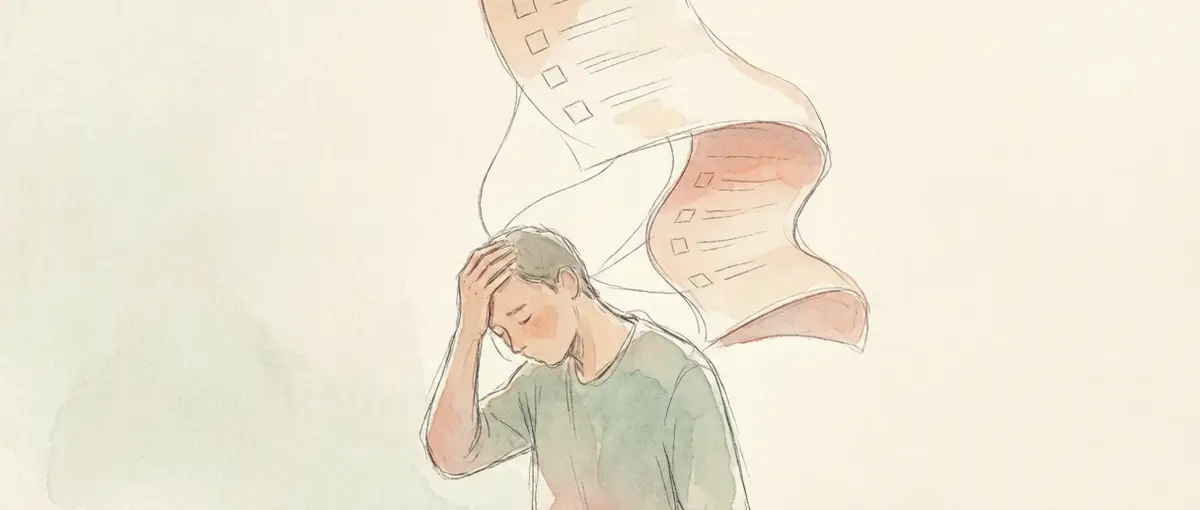
How many times a day do you say "should" to yourself? Should sleep early, should reply to her message, should be more patient with my parents, should push that project one step further. These "shoulds" stand behind you like a foreman; if you don't move, it coughs to remind you. It's not that you don't want to rest — the moment you do, "should" jumps out and says you're not good enough.
It's not that you're pathologically disciplined. It's that "should" has been living your life for too long; you can barely hear what you truly want.
That list scrawled full of "should"
What does "should" look like? It always carries a tone of "have to." Should exercise, or your body falls apart; should socialize, or people forget you; should stay emotionally steady, or you seem immature. Each line patches a hole of "right now I'm not enough."
The list grows longer, and you run yourself more ragged. The strangest part: many things on the list, you don't enjoy doing them, yet feel uneasy not doing them. You've become a machine running on a schedule — the indicator light is on, but the person is empty.
Worse, you start using "should" to demand things of others. You should understand me, should take initiative, should be more driven. Once you install this ruler in a relationship, every inch they fall short adds a measure of disappointment — but that ruler, you secretly set yourself.
Who stuffed you with "should"
Many "shoulds" were written for you by others long ago. Parents said "a good girl is obedient," teachers said "the good child listens," the circle said "by thirty you should have your act together." As a child you had no strength to argue, so you tucked those words into your body; grown up, they play automatically, and you think "I always thought this way."
Some people use "should" to trade for security. In an uncertain world, "doing the right thing" feels controllable. Should work hard, should be frugal, should be presentable — as long as you follow, you won't fall behind. But when "should" becomes the only navigation, you've long forgotten where you wanted to go.
There's another layer: when "I deserve to be loved" feels uncertain, you use "I'm enough of a should" to trade for approval. The more you match expectations, the more you dare believe "I'm accepted." You're not living yourself; you're performing a version of "worthy of love."
When "should" replaces "want"
The biggest pity is that your "want" slowly loses its voice. You want to take a walk, but "should" says read; you want to refuse, but "should" says help; you want to rest, but "should" says hustle while you're young. Over time, you can't tell which is sincere and which is a reflex.
It also leaves you tired yet empty. You finish the list but feel no solid ground, because that sense of achievement is borrowed — it's "I did what others wanted," not "I did what I love." The emptiness is because you're not in it.
The deeper cost is distance in relationships. Someone forever living in "should" can hardly get close to anyone. You're too right, too sensible; others end up not daring to treat you as an ordinary person. You win the rules but lose the closeness.
Lighten the load on the list
Try an "should" census once: write down every "should" that came up today and ask — is this really what I want, or who stuffed it into me? Anything you can't answer, cross it off first. A shorter list means easier breathing.
Also leave one small thing each day that you do "only because you want to": eat when you want to eat, zone out when you want to zone out, for no reason at all. Let "want" grow back, even if tiny.
When "should" sounds again, don't rush to obey — pause three seconds and ask: if I don't do this, will the sky fall? Most of the time, no.
How do I stop saying should all the time?
When a should appears, pause and ask, "Is this a real need, a value I chose, or an old rule I inherited?" Keep the obligations that protect your life, rewrite the rest as choices, and leave one small part of the day for something you want without needing a reason.
Why do I feel guilty when I do not do what I should?
The word may be carrying more than a plan; it can sound like a judgment that you are lazy, selfish, or behind. Replace the global accusation with a specific decision: what matters today, what can wait, and what you are choosing not to do. Clarity is kinder than an endless list of moral demands.
Want to understand whose rules are steering your life?
If your inner list is louder than your own wants, gentle self-exploration can help you take the steering wheel back without discarding responsibility.
In the end
"Should" isn't the enemy. It's a signpost left by those before us — some useful, some long expired. What you need to do isn't throw it all away, but take the steering wheel back into your own hands.
A person pushed by "should" goes far, but in someone else's direction. Try listening to that covered-up voice — it may be faint, but it's your own. Keep a few lines on the list that you truly want; leave the rest for others to "should." Your life doesn't need every box checked.
Keep reading: How to Stop Saying "Sorry" When It Isn't Your Fault · When Work Gets Thrown Your Way, How Do You Stop Automatically Catching It? · Is It Normal to Feel Guilty After Saying No?
Written and reviewed by DustEcho Editorial for self-reflection and cultural inquiry—not counseling, medical advice, or a clinical diagnosis.
Not sure where to begin?