Is It Normal to Not Know How to Accept Care?
DustEcho Editorial
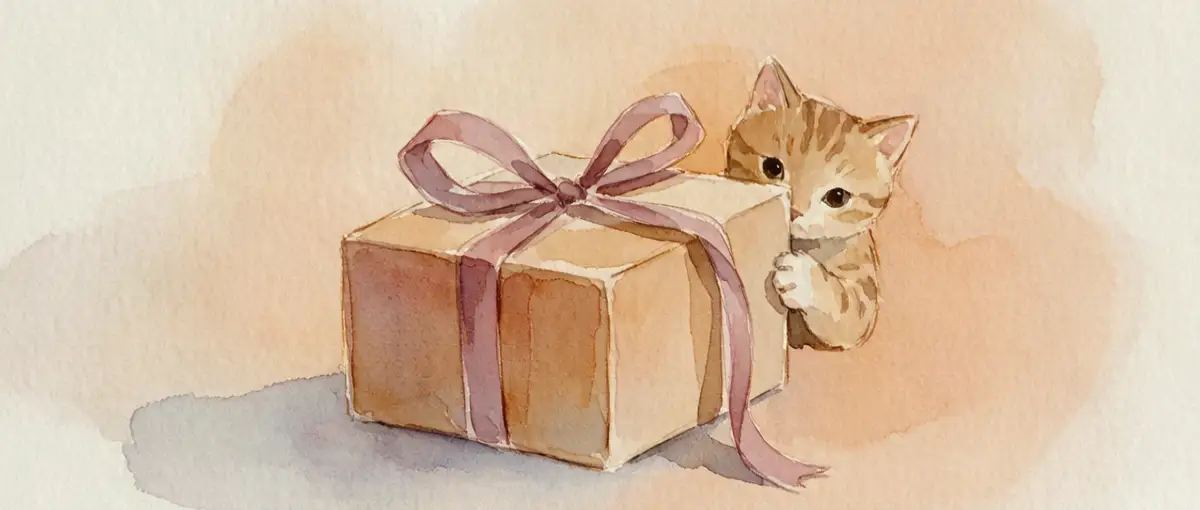
Yes, it is completely normal. Not knowing how to receive someone's kindness does not make you cold, and it does not mean you are unlovable. Most of the time it simply means you have spent so long being the dependable one that your "receiving muscles" have gone unused. When a person who has been braced for years is finally allowed to relax, the muscles tremble — that is all that is happening, not a verdict on your character.
So here is the bottom line up front: struggling to accept care is an extremely common reaction. You can even read it as the trace that long-term over-reliability leaves on a body. It is not a disorder, and it is nothing to be ashamed of.
I keep thinking of a small scene. A friend offers to treat you to a meal and you scramble to grab the bill. A coworker brings you coffee without being asked and you say thank you three times, then feel a flicker of panic after hanging up. A partner says "you rest, I'll clean up" and you become restless, convinced you don't deserve the kindness until the floor is mopped. Nobody is being difficult on purpose. Yet every time you are cared for, an unspoken debt seems to be written into your ledger.
Why do I panic more the nicer people are to me?
Panic usually is not about dislike. It is about three things being touched at once.
- Your sense of control is gently taken away. When you are used to carrying everything yourself, someone's kindness briefly leaves you "without the initiative." For many people, being in charge is what equals safety. The moment someone does something for you, the prop that said "I don't need anyone" gets shaken.
- Your unworthiness gets quietly activated. If a voice inside has long said "I'm not special, why would anyone treat me this way," then when warmth arrives your first reaction is not comfort but "they must have the wrong person." This looks a lot like what we explore in why you feel you don't deserve good things, where good fortune is met first with suspicion.
- A debt starts accruing interest on its own. Many of us translate "being cared for" into "now I owe one." Accepting stops being light and becomes a transaction to be repaid fast. As we note in why receiving kindness makes you uneasy, that unease is fundamentally an oversensitivity to equality.
Put those three together and the panic is not a character flaw. It is a self-protection logic that once helped you survive the days when no one was there to lean on. The discomfort is evidence of an old system doing its job, not evidence that something is wrong with you today.
Is this normal, or is something wrong with me?
It is completely normal, and the fact that you worry about it at all is proof that you care about your relationships.
We often misread "can't receive" as "doesn't love herself enough" or "too selfish." Almost always the opposite is true. You are not unwilling to be loved; you are afraid that once you let it in, you will never get back to that safe position of "never troubling anyone." When something good happens and you feel oddly empty, it helps to remember — as we wrote in why you feel nothing when something good happens to you — that a delay in feeling is not the absence of feeling.
There is also a quieter pattern worth naming. Some people can't take in good care because love itself triggers alarm first. You might read why you get suspicious when you're loved, where what looks like distrust is really an early lesson that "too-good things usually come with a price." So not knowing how to accept care was never you being "broken." It is simply the reasonable mark that past experience left on you.
The table below places the shamed imagination next to what is closer to the truth. It may let you exhale.
| The thought that flashes through your mind | The explanation closer to reality |
|---|---|
| Am I just cold? | You simply haven't learned to separate "being cared for" from "being weak." |
| I must not deserve this. | You do deserve it; the feeling of undeserving just runs faster than the facts. |
| There must be something wrong with me. | This is a habit formed by long self-reliance, not a malfunction. |
| I can't even receive love. | Receiving love is a muscle you practice, not a talent you're born with. |
How can I slowly learn to accept care?
Don't expect to become relaxed overnight. Taking in kindness is like growing a new muscle; start with the smallest weight. Pick one of these you can try tonight.
- Say the thank-you in full, and press pause on the payback. When care arrives, say only "thank you, I'm glad." Resist the urge to immediately return the favor or repay the debt. Let that thank-you linger three extra seconds before your hands reach for the equalizer.
- Sort the kindness into categories. Tell apart "they did it out of burden" from "they genuinely wanted to." When it is the latter, accepting is actually honoring their wish — refusing can leave the giver feeling let down. This is the flip side of what we discuss in why you feel guilty saying no to family, where saying no is itself a form of care.
- Practice naming one "specific good." Instead of the polite "sorry to trouble you," say "the soup you made was exactly what I needed most today." Specificity makes accepting real and shows the other person the kindness landed.
- Allow yourself to "receive first, digest later." Eastern wisdom speaks of letting go — not pushing things away, but first catching them, then loosening your grip, then not clinging. You can accept the good now and digest the unease later; you don't have to process it all on the spot.
If you notice you always default to "I'd rather carry it alone," our piece on why you'd rather carry it alone sits with the unspoken sentence behind solitary burden: "I'm afraid to trouble people." Learning to receive is not the opposite of strength; it is what lets a relationship breathe in both directions.
Starting with a glass of water
Don't turn "learning to receive" into a big exam. It can begin with a tiny moment: someone hands you a glass of water, and instead of "let me, let me," you empty your hands, take it, say thank you, and actually drink a sip.
The sip itself matters little. What matters is that your hands finally remember one thing — that it is okay to be empty; that what is handed to you does not always have to be given back at once. You do not have to become a different person before you are allowed to be treated well. As you are right now, you are already capable of holding a glass of water.
Is it normal to not know how to accept care?
Yes. It is common when you have spent a long time being dependable, self-sufficient, or afraid of owing people. The discomfort does not prove that care is wrong or that you are unlovable; it means receiving is unfamiliar. Start with one small kindness, say thank you once, and let your body learn that support can arrive without immediate repayment.
Want to understand why care is difficult to receive?
Use self-exploration to notice the difference between genuine boundaries and the reflex that pushes away safe support.
Written and reviewed by DustEcho Editorial for self-reflection and cultural inquiry—not counseling, medical advice, or a clinical diagnosis.
Not sure where to begin?