INFP Personality: Values, Depth, and Quiet Boundaries
DustEcho Editorial
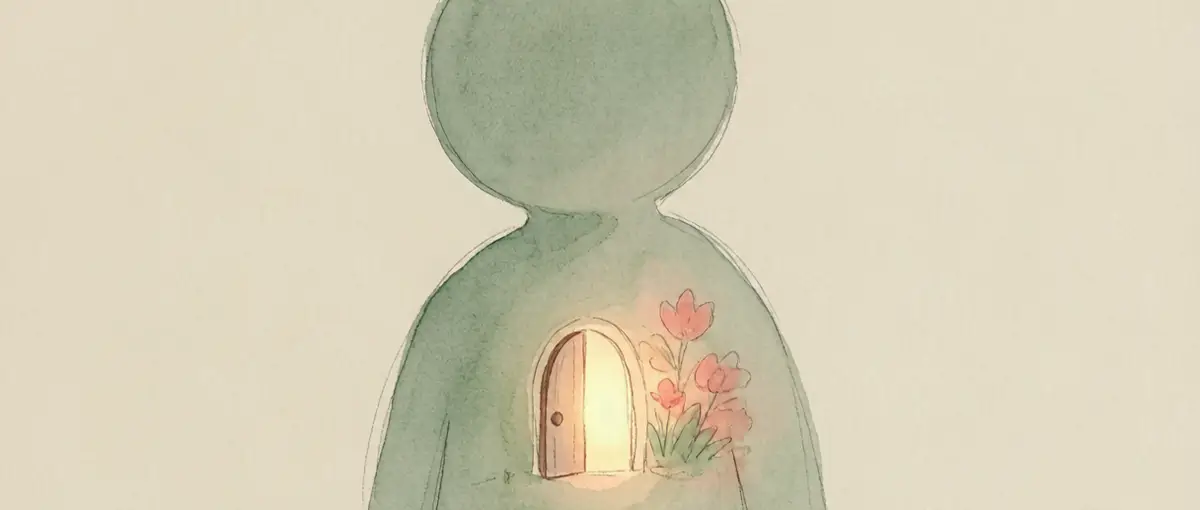
INFP is an MBTI personality pattern often associated with introversion, intuition, feeling, and perceiving. INFPs may seem easygoing while holding strong private values and boundaries. Their flexibility in small matters does not mean they are willing to compromise what feels real, ethical, or deeply important.
People like this are often typed as INFP: Introverted, Intuitive, Feeling, Perceiving. Others call you "laid-back" or "wishy-washy," but the truth is you hold a patch of ground inside that is fiercely clear-eyed and stubborn. You just don't show it to anyone easily.
You seem easygoing on the surface, but underneath you keep a private yardstick
An INFP's easygoing nature is offered to the world; that yardstick is kept for yourself. You don't sweat the small stuff, because all your caring is loaded onto two questions: "Is it real?" and "Is it worth it?" Someone you don't trust can be as warm as they like and still never get close; a cause you don't believe in, no matter how profitable, and you can't take a single step toward it.
You're not without principles — your principles are simply invisible. They aren't written in any rulebook; they live in the picture inside you of how a life ought to be lived. Others think you're scattered, but you know your bottom line better than anyone. A friend invites you into something that "pays fast but isn't quite clean," and you turn it down without a word — not out of superiority, but because that yardstick showed itself on the spot.
The things you treasure, others often can't understand
You'll get teary over a single line of lyrics late at night. You'll carry an unfinished story with you for a long time. You'll replay in your head, over and over, the exact words you might have said wrong to someone you care about. To pragmatic people this looks "too sensitive," but to you it's a real weight. Your world runs deeper than it appears.
You'll also hold onto a single shot from a film, quietly, for years. Others laugh and ask "really?" and you just smile without explaining. But you know in your heart that the things others flick past without a thought are exactly the proof that you're alive.
Why you burn so much energy on yourself
One look from someone, one harsh word, and you replay it in your head many times over — you write extra scenes for yourself, then talk yourself into letting go. You live with great sincerity, and for that reason you're more easily hurt than others. The same sentence passes through someone else's ears and is gone; with you, it has to round several corners before it finally lands.
You're not fragile — you're simply too sensitive to "the warmth inside a relationship." You're afraid of misunderstandings, afraid the other person is unhappy, afraid a connection has quietly broken — so you carry every uncertainty on your own back and chew on it again and again.
Why you always feel like you don't fit in
Because what you want is often not the worldly package of "stable, respectable, winning." You'd rather live in a way that's true to yourself, even if it's slower, poorer, or weirder. That stubbornness makes you stick out in an environment ruled by gain.
But that's not weird — it's that you guard a sincerity others have lost. You won't comfort yourself into settling by saying "everyone does it this way." One INFP said she quit a high-paying job she didn't like; her whole family called her crazy, but only she knew that the feeling of wanting to throw up the moment she opened her eyes each morning was worse than being poor.
You also take on too much responsibility in relationships
You're always rushing ahead to catch other people's troubles, worrying on their behalf even before they do. You think that's care, but sometimes it's only something you don't dare admit: you're afraid that the moment you let go, the relationship will collapse. So the harder you pull, the more at ease the other person becomes, and in the end you're the only one worn out.
You mistake "being needed by the other person" for proof that you're connected. But a good relationship shouldn't have to be kept alive by you emptying yourself out.
You quietly "disappear" in the middle of a crowd
Everyone's laughing together at a dinner, and you're laughing too — yet at some moment it's as if someone hit mute. You look at familiar faces and feel a pane of glass between you. You don't say anything; you just set your chopsticks down and pick them up again.
That's not standoffishness. It's your yardstick quietly measuring: how much of this is the real me? You don't have to blend in every single time. Allowing yourself to watch from behind the glass for a while is also a kind of honesty.
You rehearse what you'll say after one insincere yes
You agree offhand to a dinner you didn't want to go to, and the moment you hang up you start regretting it, spending the whole evening working out how to take it back without hurting anyone. The other person forgot long ago, but you're still wrestling with yourself.
You want relationships to be without a single crack so badly that you swallow your grievances down inside. But real closeness can make room for one "I don't really feel like going." Try saying it once, and you'll see the sky doesn't fall.
You weigh "what you like" above "what fits"
Others pick a job by salary and prospects; you first ask, "Is this something I want to face every time I wake up?" You'll accept less money, but ask you to betray that yardstick and you can't take a single step.
Your refusal to settle isn't being difficult — it's that you put "being true to yourself" ahead of "keeping others satisfied." This path may be narrower and slower, but at the end of it you're at ease. That breath of relief is worth guarding.
You treasure small things no one else can see
You keep a yellowed ticket stub, a line of poetry jotted down on impulse — things others would toss as trash, you treat as treasure. They aren't worth money, but they hold a moment when you truly lived.
You guard these because, more than anyone, you fear having lived in vain. The tiny details others overlook all carry weight in your heart. This isn't being precious; it's the seriousness with which you refuse to be careless in how you meet the world.
You draft and redraft late at night
Something unpleasant happened with someone during the day, and late at night you lie there, saying that line eight hundred times over, imagining every possible response, growing more awake the more you think, and only dozing off as dawn approaches.
You go over it like this not because you're petty, but because you want so badly to be at peace with people. Yet some knots are untied in the moment, not thought out. Try to believe that someone who truly cares about you won't walk away over one poorly chosen sentence.
When you close the door, leave a crack open
If you're an INFP like this, the most important thing to learn isn't to become more "realistic," but to learn to speak that inner yardstick out gently. You don't have to keep retreating just to avoid hurting anyone, and you don't have to smother your own dislike just to fit in.
That room inside you deserves respect — including from yourself. Once in a while, open the door a crack and let the real you step out, and you'll find that the people who truly understand you are exactly the ones who love this refusal to settle. Weakness is not your label. Clarity is.
What does INFP mean in MBTI?
INFP stands for Introverted, Intuitive, Feeling, and Perceiving. INFPs are often described as idealistic, values-led, imaginative, and protective of their inner world. These are preferences rather than a fixed verdict; the useful question is how someone turns values into relationships and choices in real life.
Want to see your own personality pattern?
Try the 5-minute personality exploration to reflect on your values, boundaries, and way of connecting.
Keep reading: Why ENTPs Can't Resist Taking Every Rule Apart · Why Do I Always, Without Realizing It, Become the One Who Brings Everyone Together · Why I Light Up the Moment I Step Into a Lively Crowd: The ESFP Personality
Written and reviewed by DustEcho Editorial for self-reflection and cultural inquiry—not counseling, medical advice, or a clinical diagnosis.
Not sure where to begin?