ENTJ Personality: Leadership, Drive, and Rest
DustEcho Editorial
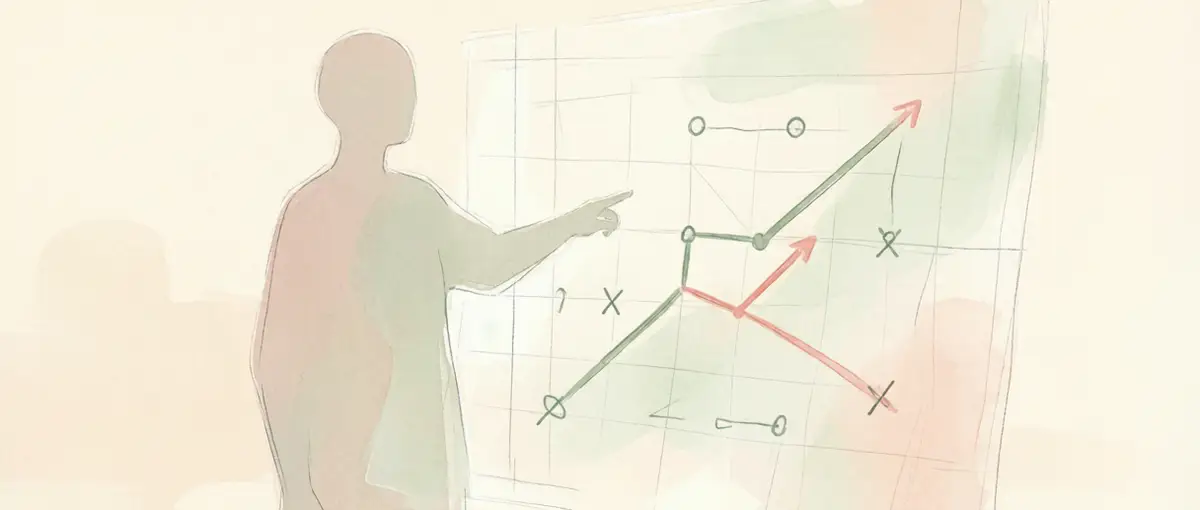
ENTJ is an MBTI personality pattern often associated with extraversion, intuition, thinking, and judging. ENTJs may quickly organize goals, people, and systems around a better result. This drive can support leadership, but it is not a duty to optimize every moment or a reason to measure your worth only by achievement.
People like you are usually filed under ENTJ: Extraverted, Intuitive, Thinking, Judging. Others call you "bossy" or a "control freak." In truth you just can't stand the sight of something that could clearly be better, yet sits still.
Your engine runs on "it could be one level higher"
The Judging axis weighs heavily on you, and it points outward. When you see a mess, your first instinct isn't to complain — it's "let me straighten this out." You enjoy building something from nothing: setting the direction, dividing the tasks, pushing everyone forward. You're the kind of person who, once you're on board, makes sure things don't fall apart at the finish line.
Your confidence isn't fake. You really can grab the main thread out of chaos in an instant, and you really do dare to make the call. Decisions that take others half a day of dithering, you make in three minutes — and more often than not, you're right.
It's not that you want to control — you're afraid of waste
You're often misread as someone who loves to give orders. What you actually fear most is low efficiency and endless back-and-forth — the kind of situation where "this could be said in five minutes, but we're stuck in a two-hour meeting" is torture to you. When you push people, it's often not about dominating them; you genuinely believe "this saves everyone time."
But your directness can sometimes wound a sensitive person. What you intend as efficiency, the other person feels as "being ignored." You're not indifferent to people — you've just grown too used to treating them as "one node in a system" to be scheduled, forgetting that people aren't parts.
Your sense of worth is tied to "getting things done"
The trap you fall into most easily is "if I'm not producing, who am I?" The moment you stop, the hole that goals have been filling all along opens up: apart from being "useful," can I also just be quiet, and be liked?
You rarely show weakness, because to you, showing weakness is almost like "dropping the ball." And so you turn loneliness into a posture you refuse to admit. You've won so many battles, yet few people want to be close to you simply because you are you.
You, too, are someone who gets tired
You lead the team across the finish line of a big project. At the celebration everyone raises a glass; you smile and accept the toasts, but at home you sit in an empty room for a long time. Suddenly you think: how nice it would be if someone asked "are you tired?" instead of "what's the next step?"
You tie your worth to "getting things done," and so you don't dare to stop, don't want to seem weak. Yet even the strongest engine needs to be switched off for maintenance. Allow yourself a day when you produce nothing at all — just exist as a person, and let the world catch you once, properly.
Draw the battle plan into the "living well" column too
You see the main thread at a glance
The project has just been approved; others are still figuring out what to do, and you've already drawn the goals, the milestones, who owns which piece, and where to adjust when stuck. In the meeting you set the direction in three minutes while someone is still dazed. You're not stealing the spotlight — that impulse to "put up the skeleton first" is simply far faster than "talking it through slowly." Your hands are already moving while others are still thinking. This speed of yours is a gift, but it also often leaves the people who can't keep up with no gap to even get a word in.
You're naturally good at building frameworks — a real skill, and also one that easily leaves slower people behind. You don't have to be the one charging ahead every time. Occasionally hand the pen to someone else: you set the first step, and I'll follow. You'll find that letting people draw their own main thread — rather than drawing it for them and having them trace over it — keeps their hearts better, and grows something unexpectedly good. Letting someone decide for themselves keeps them around far more than deciding for them. Step back half a pace, and others step forward a pace — that's what real leadership looks like.
You pushed forward, but didn't look back at the people
An ENTJ once said he led his team to close a big deal in two months, and after the celebration a teammate said privately, "with him it's equal parts respect and fear." He was stunned: I thought getting the job done was doing right by them. He hadn't noticed that someone, to keep up with his pace, had secretly pulled several all-nighters, while he only ever asked about progress and never once said "are you tired?" He won the deal, yet nearly failed to win the hearts of that group. Results speak; but hearts, too, have to be seen by you, to truly stay.
You're too used to treating progress as people, forgetting that people aren't nodes — they get tired, they want to be seen. Efficiency isn't wrong, but people don't exist for your chart. As you push the tasks forward, also leave a word of care: are you comfortable with this step, do you need me to lend a hand? What you achieve then isn't just a result, but a group of people willing to charge with you again. Getting it done matters; the people you remember matter just as much.
You can't stop, because you're afraid of the empty
On the weekend you meant to rest, but you woke up and listed seven things to "do along the way" — from a review to errands to replying to messages — and busied yourself until dark. At night you collapse on the sofa thinking: I wanted to rest, so how did it fill up again? You're not incapable of sitting still; it's that the emptiness of "not producing" makes you quietly panic, like the hum of a machine at idle you can't quite suppress. You fear that emptiness, yet you don't know that the emptiness is exactly your body calling a stop for you.
You've staked the weight of your whole life on the two words "get it done," and so resting feels like proving you're useless. Give yourself a day off — hand in no achievement, just be an ordinary person, caught and held. The you who's willing to let go will actually hold that chart more steadily, and catch the people you truly care about. You don't have to always be the one pushing the chart; there should be someone who catches the chart for you. When you're willing to be caught, that chart finally has someone to hold it up. Stopping for a moment doesn't count as losing.
If you're this kind of ENTJ, the most worthwhile lesson to practice is to schedule the things beyond "efficiency" seriously too: sit and do nothing with family, allow yourself a day when you produce nothing, admit "I get tired too."
You don't have to be winning forever. Put the map down now and then, and simply, as an ordinary person, let the world catch you once, properly — that chart that made you invincible will, in turn, hold up steadier the things you truly care about. You deserve to be loved, not only because you're useful. A true leader first learns to be caught, and only then talks about leading others.
What does ENTJ mean in MBTI?
ENTJ stands for Extraverted, Intuitive, Thinking, and Judging. ENTJs are often described as decisive, strategic, organized, and comfortable taking responsibility for direction. These are preferences rather than a command to lead; healthy ENTJs also learn to rest, listen, and let other people contribute differently.
Want to see your own personality pattern?
Try the 5-minute personality exploration to reflect on how drive, leadership, and rest fit together for you.
Keep reading: Why Do I Always, Without Realizing It, Become the One Who Brings Everyone Together · Why I Light Up the Moment I Step Into a Lively Crowd: The ESFP Personality · Why You Can't Resist Straightening Up Every Mess You See
Written and reviewed by DustEcho Editorial for self-reflection and cultural inquiry—not counseling, medical advice, or a clinical diagnosis.
Not sure where to begin?