ESTP Personality: Action, Adaptability, and Stillness
DustEcho Editorial
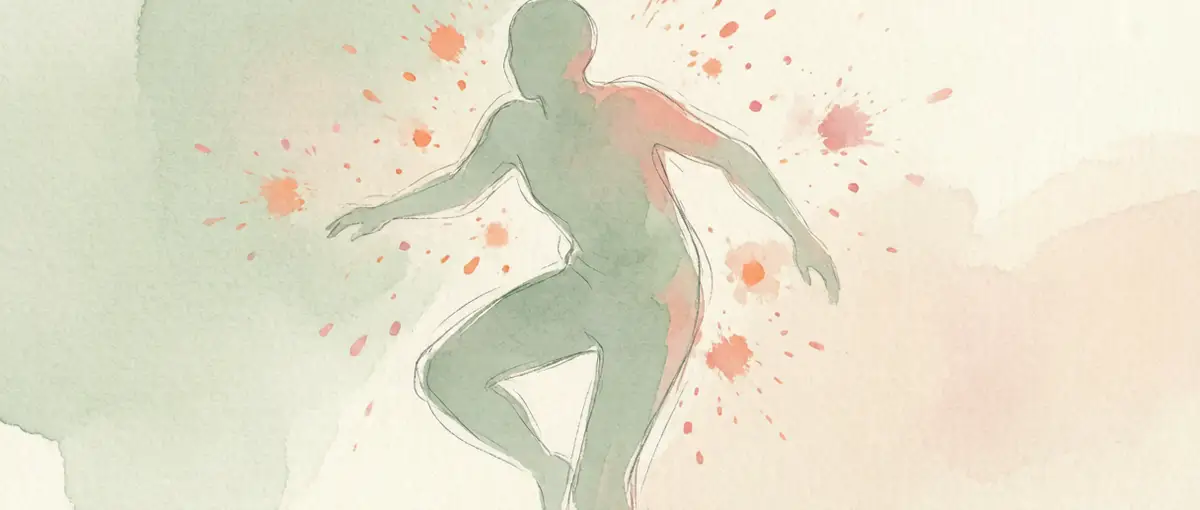
ESTP is an MBTI personality pattern often associated with extraversion, sensing, thinking, and perceiving. ESTPs may learn through action, real-time feedback, and direct contact with the world. Their adaptability is a strength, but learning to slow down can help their energy become more intentional rather than simply more stimulated.
People like this often get sorted into ESTP: Extraverted, Sensing, Thinking, Perceiving. Others call you "restless" or "too wild," but really you just need the real world to give you feedback instead of spinning in circles inside your own head.
You live in the moment, not in your imagination.
An ESTP's energy points outward, toward what's happening right now. You trust "jump in when it shows up" over "wait until I've thought it through." A new place — you rush in to feel it out first. A problem — you get your hands on it first. Making a mistake beats staring at it any day. To you, life is meant to be lived through, not analyzed to death.
That sense of being present makes you shine in emergencies. While everyone else is still frozen in confusion, you've already sprung into action. At a party that's gone quiet, you can warm it back up in three sentences. You're the person who makes things "not freeze up as long as you're there." Once a friend's car broke down halfway, and while the whole car panicked over travel guides, you'd already popped the hood, rolled up your sleeves, called a tow truck, and grabbed everyone dinner on the side.
It's not impulsiveness — it's trusting your instincts.
Your decisions often get called "too hasty." But you know what you're doing: over-thinking lots of things just keeps your feet from moving, so you'd rather act first and adjust on the way. Your cleverness isn't in hoarding plans; it's in rolling with the punches. You're like water — you take the shape of whatever's in front of you instead of fighting reality.
A project falls through, and while others are still picking apart which step went wrong, you've already scrolled into the next opportunity. You're not heartless — you just know instinctively that parking in the past won't solve the future.
You have a quiet side too.
Don't think you only know how to play hard. When it really counts, you're steadier than anyone. You don't spiral in your emotions; you just get to work. A friend told me that the night she broke up, she didn't cry or make a scene — the next day she went to work as usual and cleared every report she'd let pile up. That's the ESTP way of processing: covering emotion with action, and covering it long enough, it passes.
But this hides a problem too: you're so good at "covering" that some things meant for a good cry get permanently pressed down into your body by your busyness.
Your drive is both a gift and a blind spot.
You solve things fast — sometimes too fast. Before you've even heard what the other person wants, the solution is already flying at them. You think you're helping; they might only feel "you don't get me at all."
Slowing down a beat isn't holding anyone back. It's letting things land in the right place before you charge. That energy of yours, paired with a little "listen first," hits harder than charging alone.
Why can't you sit still.
Because quiet doesn't feel like rest to you — it feels like suffocating. You need stimulation; you need people and events crashing into you before you feel "alive." Too long alone, and that restless energy turns into irritation that even scares you.
You're not incapable of being alone — you just haven't learned to sit with the quiet. You're afraid that once things go still, you'll have to face the questions you've been dodging with noise — like who you actually want to become, not just "what are we doing today."
You light up the second you walk into a crowd
After a draining day, the moment a friend calls you're out the door. Three jokes in and you've lit the mood on fire; the more you play, the more alive you get, like that earlier exhaustion belonged to someone else. You love being fed by the moment.
Your energy points outward — you only get going when there are people and noise. That's not shallowness; it's just how you meet the world: by colliding with it. Admitting you need the noise is more honest than forcing yourself to be alone.
The more chaotic it gets, the more you're in your element
The tour bus breaks down in the middle of nowhere, everyone's complaining, and you're already down there gesturing with the driver, rearranging the guesthouse booking, and settling a kid from your coach on the side. You only feel the scare afterward; in the moment you're unusually steady.
Your presence of mind is a gift — the messier it gets, the more you're on. But remember, once it passes you're allowed to breathe; you don't have to carry it forever. That steadiness of yours deserves to be spent on yourself at least once, not only on saving the scene.
What you fear is the emptiness of having nothing to do
A long holiday with no plans, you scroll your phone all day, then at night you're suddenly restless, like there's a motor inside you that won't switch off. You have to jog a couple laps downstairs just to press that anxiety back down.
You always need some movement around you to feel safe — that's not a flaw, just that your way of recharging runs opposite to everyone else's. But once in a while, try sitting with that emptiness instead of rushing to fill it. You might find the version of you with nothing happening is pretty okay too.
You hide your serious side behind jokes
When something really matters, you always toss out a joke first to carry the mood past it. Others think you don't care, but you care more than anyone — you just can't pull off the serious face.
You're used to wearing lightness like armor, afraid that being earnest makes you look fake. But take it off now and then and let the people you care about see you tense up too — the relationship gets realer. You don't have to be joking forever; being serious once won't bring the sky down.
Even your "always on" mode can wear you down
A whole week of dinners, sports, one gathering after another, and finally at three in the morning one day you're lying there wide-eyed — your body's protesting but you can't stop, because the moment you do you're afraid of missing something.
Your presence is expensive, but it needs cool-down time too. Try keeping one evening for yourself — no plans, no appointments — and let that energy catch its breath. You don't need to be present every single moment; the world keeps spinning even when you skip once.
Turn that energy toward deeper connection
If you're this kind of ESTP, the gentlest growth is trying to send a little of that "charge outward" energy to the people right beside you. You're great at getting everyone to play, but sometimes what the other person wants isn't a lively plan — it's you listening, quiet and serious, until they finish one sentence.
You don't have to be moving every second. Stop now and then, look at the person who's been running alongside you, and you'll find: slow down a little and the world doesn't collapse either. Your fire is a gift. It's just that this gift deserves to be handed to the plainest person too, not only saved for the most thrilling scenes.
What does ESTP mean in MBTI?
ESTP stands for Extraverted, Sensing, Thinking, and Perceiving. ESTPs are often described as energetic, practical, observant, adaptable, and comfortable responding in the moment. These are preferences rather than proof that someone is reckless; healthy ESTPs can enjoy action while listening, reflecting, and building deeper connection.
Want to see your own personality pattern?
Try the 5-minute personality exploration to reflect on how action, stimulation, and connection work together for you.
Keep reading: Why ENTPs Can't Resist Taking Every Rule Apart · Why Do I Always, Without Realizing It, Become the One Who Brings Everyone Together · Why I Light Up the Moment I Step Into a Lively Crowd: The ESFP Personality
Written and reviewed by DustEcho Editorial for self-reflection and cultural inquiry—not counseling, medical advice, or a clinical diagnosis.
Not sure where to begin?