Why do I say yes when I want to say no?
DustEcho Editorial
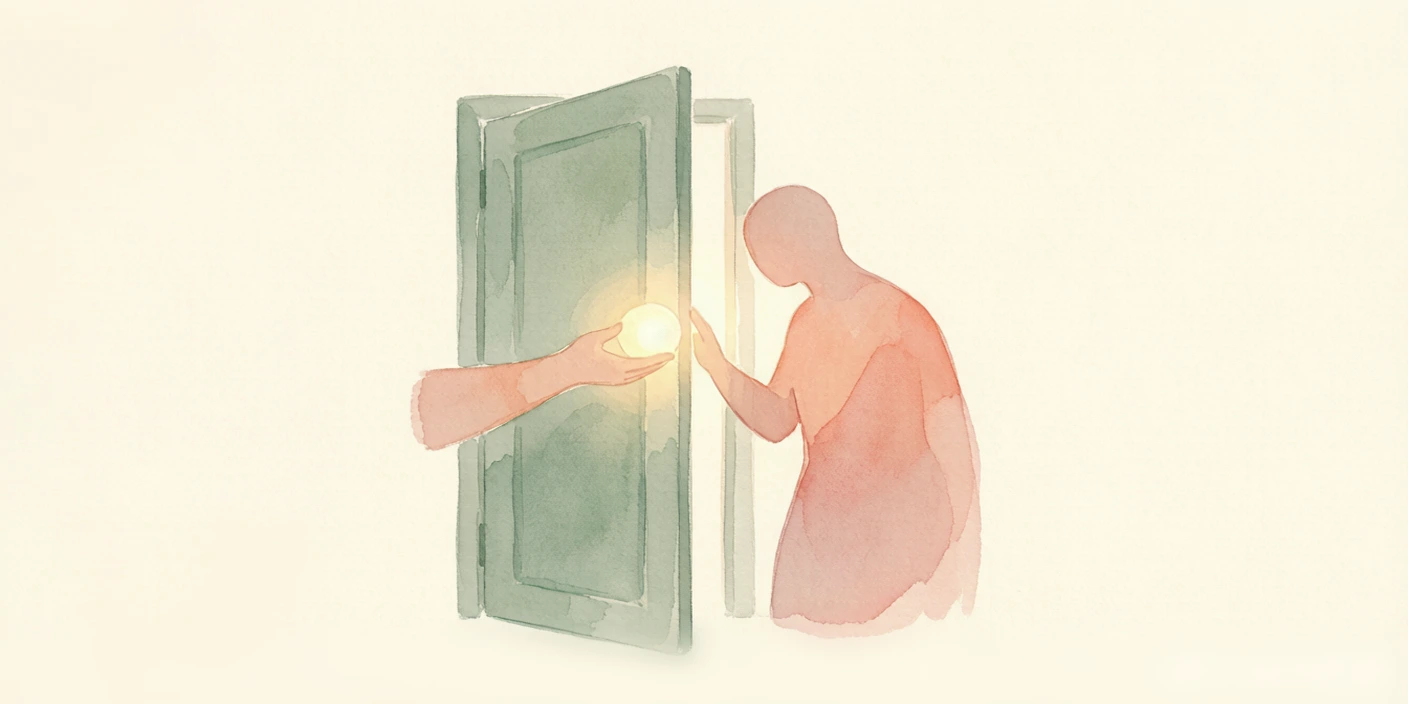
A coworker pushes over work that was theirs to begin with: "You're better at this, can you help out?" You already have a stack of things on your plate, and you know you should say, "This time, I can't." But the words come out as, "Sure, let me see what I can do." Only after they leave do you realize: I said yes again.
This probably happens more often than you think.
That "yes" is often faster than thought
You'll notice that refusing seems to come with a delay in you. Before the other person has even finished speaking, your head has already nodded; it's only when you're alone that the "I didn't actually want to" slowly surfaces.
It's not that you're slow. It's that "saying yes" is the shorter path for you. It spares you the awkwardness of that moment, the need to explain, the sight of the other person freezing up. Even if the cost is stewing in resentment later, at least the present moment is safe.
A lot of people think they're just "soft-hearted, just kind." But genuine softness doesn't leave you with a clean flash of irritation after you agree. That irritation is exactly the proof that you never wanted to — and just couldn't make yourself stop.
It's not that you're too agreeable — it's that "no" is too heavy
Later it struck me: struggling to say no is rarely a personality problem. It's something a person learned very early, in some environment: refusal has consequences.
Maybe as a child, the moment you said you didn't want to, you got "why are you being so difficult?" Maybe you expressed a refusal and the relationship went cold for a long time. Maybe your family used silence or disappointment to teach you that your "no" would make others unhappy — and their unhappiness was something you could not bear.
So the body quietly wired "saying no" to "being disliked, being abandoned, becoming a burden." Grown up, even if the other person is just an ordinary coworker, a relationship that doesn't really matter, the body can't tell "this is nothing" — it only reads "refusal = danger, say yes quickly."
This reaction is faster than the mind. While the mind is still weighing "do I have time," the body has already picked the least risky option for you: yes.
What you're really afraid of is usually not the other person
Interestingly, what many people fear isn't that the other person will actually do anything. They'd most likely say it and forget, or wouldn't even mind being refused.
What you're really afraid of is "the version of you that gets disliked."
You're afraid they'll think you're cold, ungrateful, hard to get along with. Afraid that gentle face will suddenly darken. Afraid of falling off the pedestal of "good person." A lot of this fear comes from much earlier: back then, you did lose something important from one refusal — or at least, you lost the feeling of being liked.
So you're not refusing a task. You're refusing, and then imagining a consequence in which you're not accepted. And that consequence is real, inside your body.
Once you say yes, the cost quietly accumulates
Saying "yes" feels light in the moment, but something hangs behind it.
A block of your time gets taken, the room you'd kept for yourself is gone. That reluctance in your chest doesn't disappear — it turns into a smoldering resentment, not toward the other person, but toward the self that failed to hold the line. Worse, the people around you read a signal from your "always saying yes": this person won't refuse. So similar requests multiply, and it gets harder and harder to speak up.
That's how the "people-pleaser" is made. Not because you're good-natured, but because every "no" you never voiced reinforces that expectation in others.
You can start with a "buffer"
Understanding this, you don't have to force yourself to become "a person who can refuse" overnight. That's too hard, and it's easy to overcorrect and hurt the relationship instead.
You can start with one very small change: don't answer right away.
Next time someone makes a request, try saying neither "yes" nor "no," but "let me check and get back to you." Just that one line buys you a few minutes — enough to slow down the auto-yes program and let your real thoughts surface.
You'll find that often what you need isn't to learn to refuse, but simply to learn not to agree right away. Refusing the person and refusing the task can be separate: you can refuse the task without shutting the person out; you can say "this time really doesn't work" without explaining so much that you lose yourself in it.
And if the person beside you is willing to catch that late "no" of yours — then maybe they're someone worth slowly practicing with, to build your boundary up, one piece at a time.
Written and reviewed by DustEcho Editorial for self-reflection and cultural inquiry—not counseling, medical advice, or a clinical diagnosis.
Not sure where to begin?