Tiankui: When the Step Was Just out of Reach, a Stone Appeared Beneath Your Foot
DustEcho Editorial
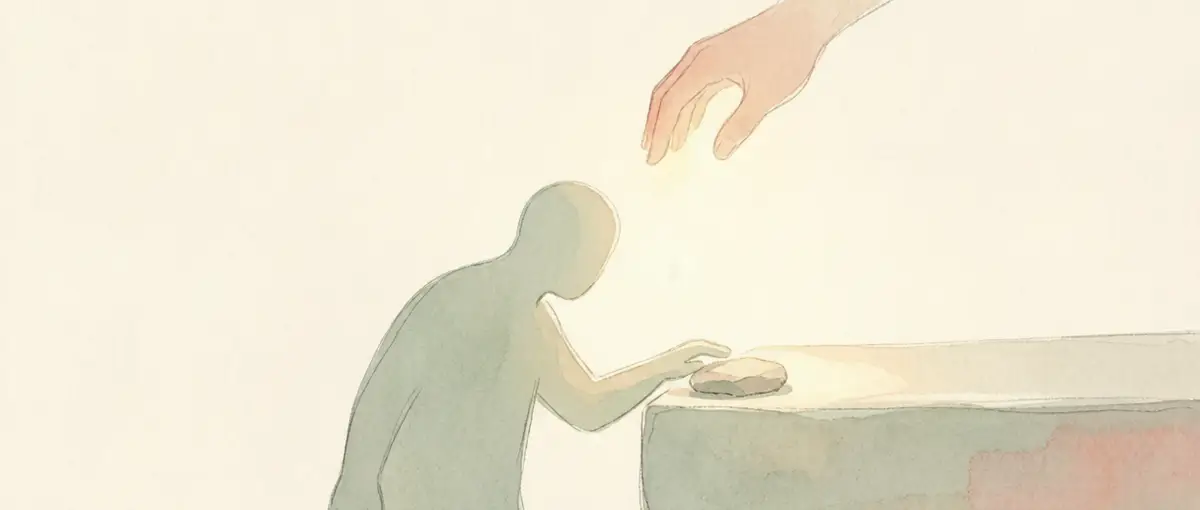
In the system of Ziwei Doushu, Tiankui is a star tied to "noble support," traditionally grouped with the Tianyi noble one, used to mark a kind of turn where "at a formal threshold, someone lifts you upward." Taken out of its terminology and set back into ordinary life, what Tiankui really points to is a very specific kind of experience—
You have probably known the feeling. You are stuck at some important pass—an exam, a job search, a promotion, or any matter that needs someone above to recognize you. You do everything you can, yet you are still missing that one layer of being seen, of being named. Just as you are worrying, along comes someone: a teacher willing to speak a word for you, a supervisor on the review panel who tilted the scale your way, or a recommendation letter you had no confidence in, landing exactly where it needed to. Not a pie falling from the sky, but someone placing a stone on the step you could not quite reach. The ancients set this relief of "being lifted at the crucial point" beneath the name Tiankui.
What does Tiankui mean in Zi Wei Dou Shu?
Tiankui is traditionally read as a symbol of timely support and being formally seen at an important threshold. In ordinary life, that may look like a mentor naming your strength, a colleague making your contribution visible, or a recommendation arriving when you are ready to use it. It is a cultural lens for reflection, not a guarantee of a “noble person” or a prediction of success.
How can I make good use of timely support?
Do your part clearly, make your work visible, and accept specific help without turning it into a debt or a substitute for your own skill. When someone opens a door, step through it yourself. Reflect on where you need support and where you may be ready to offer it to someone else.
What Tiankui Points To Is Not Luck, but Being Seen?
Tiankui is often reduced to "meeting a noble person, good fortune arriving," as if with it someone would catch you in everything. Yet its most real part was never luck itself, but "being formally seen"—in a setting ruled by procedure, seniority, and the need for recognition, where you might easily be lost in the crowd, someone is willing to bear a little name for you, take a little responsibility. It does not, like Hongluan, foretell affection arriving; nor is it, like Taohua, everyday warmth. Tiankui corresponds to a kind of "lift at the threshold": you are caught on the sill, and someone reaches from inside the door and pulls you up. The help is precious not for its size but because it happens in the most rule-bound, least flexible place—and there, once, it bent for you.
Its Shape: Quiet, but It Lands Where It Must
The help Tiankui describes is rarely loud. It might be only an examiner asking you one extra question at the interview, letting your strength show; a colleague at the meeting picking up your half-sentence and saying clearly what you meant; or the materials you could not deliver, passed by a hand onto the desk of the one who needed to see them. Its character is "landing where it should land"—it does not do the work for you, does not decide your life, only fills in the bit you were short by. You still have to walk yourself, but your foot no longer hangs in the air. It is like someone lightly steadying your elbow from behind: unnoticeable, yet your step is sure.
Don't Only Wait for the "Noble One": Tiankui Often Hides in Your Sincerity
Hear Tiankui, and people think of how to "meet a noble person"—begging around, casting a wide net, watching who might help. Yet the help Tiankui describes is the kind you can only catch after you have first done your part solidly. The more anxiously you claw at connections and shortcuts, the more likely you meet with a brush-off; the more honestly you put your skill on display and do the work well, the more likely appears that hand willing to speak for you. Many people, only after answering the paper they were meant to answer, discover someone had been watching all along, willing to pass that step. The help is less a reward than an echo—you had to stand where you could be seen before anyone had time to see you. Hide yourself away, and the step, near as it is, stays out of reach.
Catching Tiankui: Let That Step Have a Place to Land
The help Tiankui describes is concrete, and it drifts away if you let it pass. So what matters is "catching" it: when someone is willing to speak for you, to lay that half-step for you, do not be so modest you push the chance back, nor so flustered you fail to take it. Treat the lift seriously, turn it into a step you can truly mount. Many are used to shrinking back at the threshold, thinking "I don't deserve it," "wait a little longer," and the hand offered goes to waste. Yet the experience Tiankui points to is exactly this: "you are short a bit, someone fills a bit"—you catch it, and the half-step becomes a whole one; you retreat, and the stone sits empty midway. The more firmly you dare to step, the more often it comes.
In the Workplace, It Is the Light of Being Named
People who carry this experience often learn early that they are "named" at important moments. Not because they are the most outstanding, but because someone always shows their strength at the key point. The trouble is that some quietly tie their self-worth to "whether someone sponsors them," feeling they cannot stand without that hand. What Tiankui points to was never "you cannot stand without someone"—it only reminds you: being seen is a kind of luck, and more, a luck you can only catch after you have first produced something. Hold your own skill steady, and that light is only a bonus, not the ground you stand on. Treat it as a springboard, not a crutch.
Tiankui Differs from Hongluan: One Lifts, One Pulls
Tiankui is easily confused with Hongluan, but the direction differs. Hongluan is the pull of "something good is coming toward you," a forward expectation; Tiankui is the help of "you are stuck, someone lifts you up," a filling-in of the present. One draws you toward affection, the other sends you up the step. You can have Hongluan quiet while Tiankui shows often—feelings plain, yet always someone lending a hand at what matters; or Tiankui still while Hongluan burns bright—absorbed in new intimacy, left for the moment to hold your own pass. So do not measure days only by "is someone loving me"; those quiet ties that lifted you at the crucial point are also what life gives.
Don't Treat Tiankui as Something "Owed You"
Those who carry this experience have a hidden pit: slowly taking "being sponsored" as a matter of course, feeling everyone should speak for them. What Tiankui points to was never "the world owes you a noble one"; it is only help you happened upon on some stretch of road. You are a whole person, not someone others must look after; that sponsorship is a kindness, not a duty. Treat it as a bonus, not a foundation, and certainly don't, having grown used to being lifted, grow lazy about walking yourself. The more you lean on others' hands, the softer your own legs; stand yourself up, and that stepping stone truly becomes yours.
It Doesn't Pick the Time, but It Picks Where You Stand
The help of Tiankui is interesting: it often does not show when you are most brilliant, but appears precisely at the moment you most cannot reach, most need lifting. The more you think to "use connections for a shortcut," the less it comes; the more you fix yourself in the real, do what must be done well, the clearer it is. This also explains why some, after much fussing, meet no real help, while the steady worker is often pulled along. That help is a by-product, not something you can scheme for; force it, and you cannot get it.
And Don't Dodge It for Fear of Owing
The help Tiankui describes often carries the weight of "owing a favor." Some, afraid they cannot repay it, afraid of being called a climber, shrink back even when a hand is offered, preferring to stay stuck. Yet that lift does not necessarily ask for repayment—often the other simply delights to see a serious person seen. You catch it, and later, when you yourself become one who can pass a hand, the kindness continues; it is not a burden. Too afraid to owe, and you push the tie away; only if you can catch it does it turn.
In Closing
The help Tiankui describes is not large, yet it lands exactly on the step you could not reach. Do not take it as owed by fate, nor dodge it for fear of owing—do your part seriously and well, then steadily step onto the stone someone laid for you. What Tiankui teaches, in the end, is a kind of skill: at the rule-bound threshold, to dare show yourself and to catch the step others hand you. Master that skill, and no threshold, however high, will stop you.
想接着读:红鸾:喜事将近时,心里先亮起来的那盏灯 · 天喜:在最不需要的时候,偏偏来了点欢喜 · 左辅右弼:你身边,总有补上那块空的人
Written and reviewed by DustEcho Editorial for self-reflection and cultural inquiry—not counseling, medical advice, or a clinical diagnosis.
Not sure where to begin?