Ziwei: The Spot That Always Moves to Take Charge
DustEcho Editorial
Friend gatherings, when it's time to eat and no one speaks up about where to go — there's always someone who can't help saying, "Why don't we go to that place." A group trip, and somehow the booking, the room assignments, the itinerary all land on one person. At the office when something goes wrong, before anyone else has reacted, someone has already laid out the division of labor, even color-coded who's responsible for follow-up.
This kind of person, in the language of fate calculation, is called "Ziwei."
What does Ziwei mean in Zi Wei Dou Shu?
Ziwei is traditionally read as a symbol of coordination, responsibility, and the instinct to settle a group when no one else is stepping forward. In everyday life, it can describe someone reliable who may need to separate being useful from being worthy. This is a reflective personality lens, not a prediction.
How can I lead without carrying everything alone?
Delegate one decision, let someone else do it differently, and practice being valued even when you are not the person in charge. Explore the pattern gently if being needed has become your main source of safety.
What Ziwei Is?
Ziwei isn't "being a leader." It's a psychological tendency: in a group, he naturally wants to be the one who "settles things." Not stealing the spotlight — it's the instinct of "someone has to handle this, so I will." He may not hold the highest title, but the moment the atmosphere relaxes and a decision is needed, his hand goes up first.
You probably know someone like this: he books the table for gatherings, coordinates the move, draws the flowchart when a project stalls. He's not showing off — it's "if I see no one handling it, I get anxious." That sense of holding the situation together feels less like power to him and more like peace of mind. Many admire this calm, not knowing it was bought with being "always on" — others can relax; he cannot.
Its Two Sides
On the bright side, Ziwei is a reassuring kind of reliable. With him around, no one panics — he knows the next step and is willing to carry it. Friends turn to him with big decisions; teams in chaos instinctively look his way. He's like an anchor stone: not always gentle, but steady.
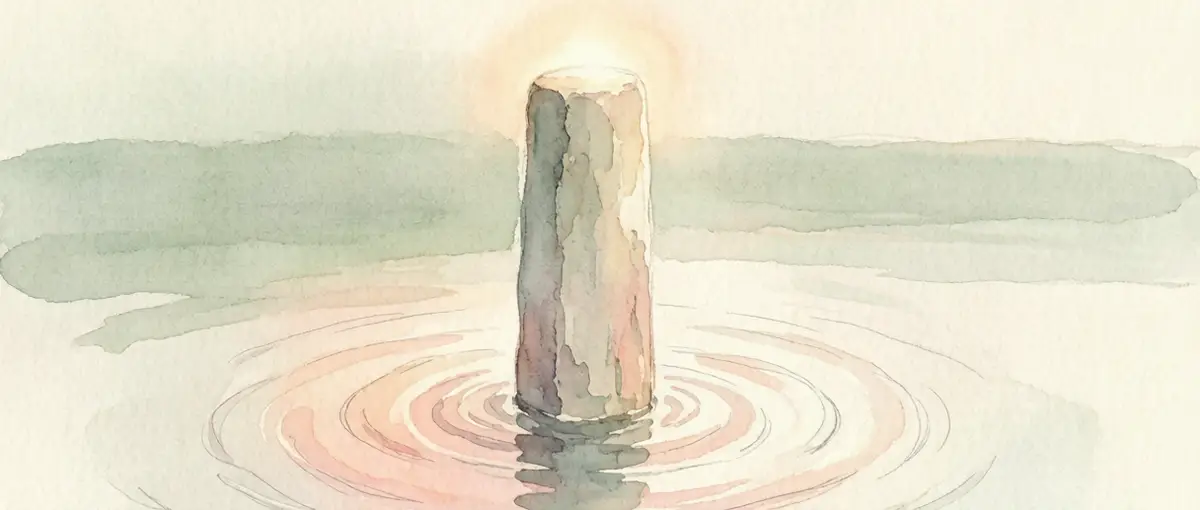
The shadow hides inside the "steadiness." To want control this badly makes letting go hard. Not that he distrusts people — it's the habit of "I'll do it, it's safer" running too deep. Over time he turns himself into a tower on a lone island: the light stays on, but no one can take his night watch. A deeper layer: Ziwei easily equates "being needed" with "being worthy." The moment no one asks him to decide, he goes faintly empty, like half the stage lights dimming — even he can't explain where the loss comes from.
In Relationships
Someone strong in Ziwei loves to be the arranger. He books the restaurant for dates, makes the travel plans, even can't help mediating when friends fight. His care shows itself through "getting you sorted."
But "arranging" can become a gentle kind of control. A partner feels: I didn't want you to decide for me, I wanted to figure it out with you. He freezes — in his eyes, handling it for you is love; how did it become control? He's also terrible at showing weakness. Because "I'm the one who holds steady," the moment he says "I don't know what to do either," it's as if the sky falls. So no matter how hard things get, he habitually carries it alone, swallowing the loneliness. The saddest part in relationships: he clearly longs to be caught, yet welds the door shut.
With Money
This isn't the down-to-earth "dropping beans into a jar one by one" of regular income. Ziwei's attitude toward money is about control: the big direction must be mine to set, the important calls mine to make. He may not keep the books himself, but he needs to know where the money went and why.
What he fears isn't having no money, but financial chaos. So with big expenses, investments, loans, he instinctively wants to decide himself, hard to hand full authority to others. This control keeps him from major money disasters, but may also make him miss chances that require letting go and taking a swing. The shadow: when "I have the final say" turns into an obsession, family feels even a small expense needs approval — life runs like stamping forms, and the love gets covered by the rules.
At Work
Someone with a Ziwei texture is born with an organizer's air. Not the most talkative, but in chaos he's fastest to put people in place and break the work into blocks. He fits roles needing coordination and direction: project lead, the backbone, the "go to him" person.
The trap is clear: he can't trust delegation. Hand off the work and he's still checking progress at midnight; someone does eighty percent and he can't help topping it to a hundred, eventually just doing it all himself. Looks reliable, but he's worn himself into a bottleneck. There's also a kind of loss: the moment he's no longer at the core, no longer needed to decide, he goes faintly panicky. Not hunger for power — in that moment of "not being needed," he can't find who he is.
How to Live With It
If you're someone strong in Ziwei, try two things against your instinct.
One: practice "letting go." Start small — let someone else order the meal, let a colleague lead a project. You'll find the sky doesn't fall, and others grow shoulders in being trusted. Two: untie "being needed" from "whether I'm good." You deserve love not because you sorted someone out, but because you are you. Try saying once, "I can't handle this one, you take it" — that's not weakness, it's leaving a door in the relationship that others can enter through.
In the End
Ziwei isn't domineering — it's a tenderness that always wants to smooth the loose threads of the world. Much in this world spins out of control, and the fact that someone is willing to raise a hand again and again saying "I'll do it" is precious in itself.
Only, a hand held up too long gets sore. Put it down now and then, let others raise theirs too, and you'll see — it turns out everyone gets by without you; and the un-needed you is just as worth keeping. Don't make "being needed" your only power source. You yourself are bright enough.
A Modern Psychological View
- Why do I always say "should" — Ziwei gets used to setting standards and making calls for others; that habit of "this is just how it should be" is often also the shadow of control in relationships (Why do I always say "should").
- Why do I feel responsible for other people's emotions — Ziwei naturally wants to steady those around him, and the moment someone is sad he wants to catch it; this "head of the family" habit is worth looking back on (Why do I feel responsible for other people's emotions).
- Why do I always fear making mistakes — Ziwei takes "the situation is in my hands" very seriously; once something might go wrong, that panic of losing control runs especially strong (Why do I always fear making mistakes).
Written and reviewed by DustEcho Editorial for self-reflection and cultural inquiry—not counseling, medical advice, or a clinical diagnosis.
Not sure where to begin?