Why do I keep replaying their reaction after I say no
DustEcho Editorial
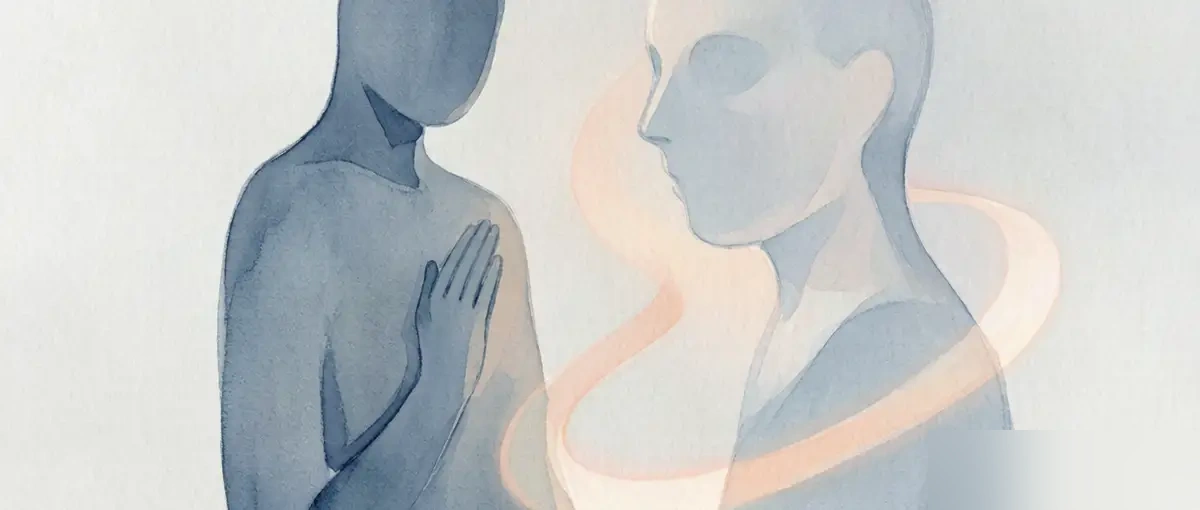
I finally said "no." For about three seconds, I felt relief. Then their half-second pause, the slight raise of an eyebrow, the curve at the corner of their mouth — my brain started looping it. Not once. Dozens of times.
The refusal was already over. But my attention stayed glued to their face like a camera that won't shut off, replaying those few frames again and again.
I'm not "reviewing" — I'm interrogating
Look closely at what's actually playing in your head. Are you genuinely analyzing their reaction? Or is every replay doing the same thing: hunting for evidence that you messed up?
They frowned — "they're upset." They went quiet for two seconds — "I was too harsh." They changed the subject quickly — "they're holding back."
Notice something? Your interpretations all point in one direction: "I did something wrong." But if you flipped the camera around and applied the same standard to times when someone said no to you — have you ever frowned? Gone quiet? Changed the subject? Almost certainly yes. And in those moments, you weren't judging them. You were simply processing information.
But when the roles reverse, you don't extend that basic grace to yourself.
One "no" became a vote on the whole relationship
What keeps me replaying isn't the expression itself. It's the meaning I've assigned to it — "from now on, they'll see me differently."
A single refusal gets unconsciously upgraded into a verdict on the entire relationship. It's as though that "no" created a crack between us, and that crack will only widen with time. They'll remember next time. The time after that, they'll hesitate. Slowly but surely, this relationship will be rewritten by one instance of saying no.
This is a massive leap. From one facial expression to the future of a relationship, there are ten thousand other explanations in between — and I skip every single one of them, landing directly on the worst possible interpretation.
In the replay, I'm the only defendant
What makes this more exhausting is this: in this mental courtroom, there's always only one person in the dock.
Me.
The other person becomes, in this replay, a perfect victim — every micro-expression is damage I caused, and I get no space to defend myself. "They went quiet because I hurt them." "Their unhappiness is my fault." "I should have found a softer way." These thoughts line up one after another, and not a single one speaks for me.
But here's reality: when adults hear "no," they respond in all kinds of ways, and most have nothing to do with being hurt. Maybe they were surprised. Maybe they were thinking about what to say next. Maybe they suddenly remembered something they wanted to add from earlier. Maybe they were just tired that day. All these possibilities disappear inside my replay. Only one script remains: I hurt them.
Those three seconds of relief — I want to give them back to you
There's something you may never have tried: catch the replay before it starts.
When you notice yourself playing back their face again, reading meaning into every tiny expression, try saying to yourself: wait. That pause might just mean they were listening. That furrowed brow might have to do with last night's bad sleep. That "no" is already said. It landed on the ground. Nothing exploded. Nothing shattered.
You're allowed to say no once. It doesn't mean you don't love this person. It doesn't make you a bad person. It doesn't mean a crack has appeared in your relationship. It's just a small thing — one person said a word to another person. That's all.
The replay can stop now. Go find those three seconds of relief. They were yours to begin with.
How can I stop replaying someone’s reaction after I say no?
Return to the facts: you made a request or declined a request, and the other person’s first expression is not a full relationship verdict. If you need to repair something, do it directly; otherwise give the conversation permission to end. If boundary guilt is persistent and overwhelming, a qualified professional can help.
Want to understand why one no feels like a threat to the whole relationship?
If you keep reviewing every pause or facial expression, gentle self-exploration can help you stay with what was actually said instead of prosecuting yourself.
Keep reading: Why do I feel selfish for having needs · Why do I always say yes then regret it · Why do I rush to take down a boundary right after I set it
Written and reviewed by DustEcho Editorial for self-reflection and cultural inquiry—not counseling, medical advice, or a clinical diagnosis.
Not sure where to begin?