Why do I over-explain when I say no
DustEcho Editorial
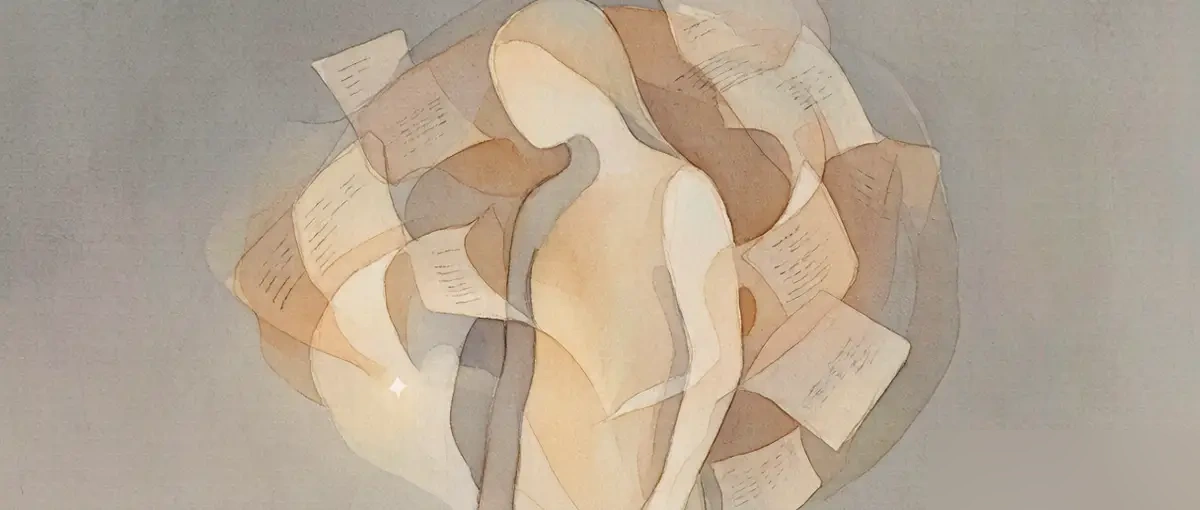
A friend sends an invitation. You can't make it. But what comes out of your mouth is a paragraph of explanations: I have plans that day, I've been exhausted lately and need rest, I didn't come last time either and worried you might mind... A simple "I can't this time" would suffice — yet you can't help laying out reasons like a carpet.
Saying no, for you, is always unusually effortful. Not because you don't want to refuse — but because a bare "no" feels too cold, too harsh, too unlike the "good you."
You treat "no" like a charge that requires a defense
Examine your refusal pattern closely. When you say no to someone, do you feel the need to attach an entire "explanation packet"? Reasons one, two, three. Context and backstory. Even anticipating their possible reactions and pre-defusing them?
Hidden beneath all this is an assumption: a "no" without sufficient reason won't hold up. It'll collapse under scrutiny, revealing your coldness, your unfriendliness, your lack of care for this relationship. So you wrap it in thick layers of justification, making it look like "a carefully considered, understandable-if-regrettable decision."
But this assumption itself has a problem. Refusal doesn't require defense. "I don't want to" and "I can't" are complete reasons in themselves.
The more you explain, the more you dig your own hole
Here's something counterintuitive: the more reasons you provide, the easier it becomes for the other person to find a workaround.
"I have plans that day" — "then another time." "I've been tired lately" — "then I'll come to you." "I couldn't make it last time and felt bad" — "I'm not that petty." Every carefully prepared reason becomes a handle they can use to sidestep your boundary.
A boundary should be a clean line: this side is yes, that side is no. But your explanations turn it into a gray blur full of "special cases," "could be considered," "maybe next time" gaps. By the end even you've forgotten why you said no in the first place.
What am I actually afraid of? Being cast as "bad"
Dig one layer deeper and the urge to explain reveals fear of a particular identity: being seen as difficult, selfish, someone who doesn't show respect.
You may have grown up with an implicit message: good people are agreeable, accommodating, try to meet others' expectations. And saying no — especially an unexplained no — got filed under "bad behavior." So every time you need to refuse, an alarm goes off inside: "prove you're not a bad person." And you rush to pile on reasons to demonstrate: "look, I have my reasons."
But there's a flaw in this logic: genuinely good people say unexplained nos too. Whether someone is kind isn't measured by how many requests they accept — it's measured by whether they treat themselves and others honestly.
Try the short no
Next time, give one reason — or none at all.
"That day doesn't work, let's do another time." Period. No elaboration. No apology. No "I really wish I could." Just that one sentence, clean.
You'll discover something surprising: most people handle a simple refusal perfectly fine. They won't ask why. Won't think you're cold. Won't reassess your relationship. Because for normal people, being told no is too ordinary to cause alarm — only inside your head does "no" feel like a minor war requiring preemptive fortifications.
Save yourself the energy from all those explanations. You're already tired enough without having to also debate yourself when refusing.
How do I stop over-explaining when I say no?
Use one clear sentence and stop: "That doesn't work for me," or, "I'm not available that day; let's try another time." You do not need to add a case for the other person to argue against. If they ask for more, you can repeat the boundary without inventing a stronger reason.
What can I say instead of giving a long explanation?
Try: "I can't take this on," "I'm keeping that time for myself," or, "No, but thank you for asking." A brief reason is fine when you genuinely want to share one, but your boundary does not become more valid as the explanation gets longer.
Want to understand why saying no feels unsafe?
If a simple refusal makes you feel like a bad person, self-exploration can help you separate honesty from rejection and care from over-accommodation.
Keep reading: Why Do I Keep Carrying Other People's Emotions as If They Were Mine? · Why do I rush to take down a boundary right after I set it · Why is saying no to family harder than to strangers
Written and reviewed by DustEcho Editorial for self-reflection and cultural inquiry—not counseling, medical advice, or a clinical diagnosis.
Not sure where to begin?