Why do I keep a backup plan that sabotages me?
DustEcho Editorial
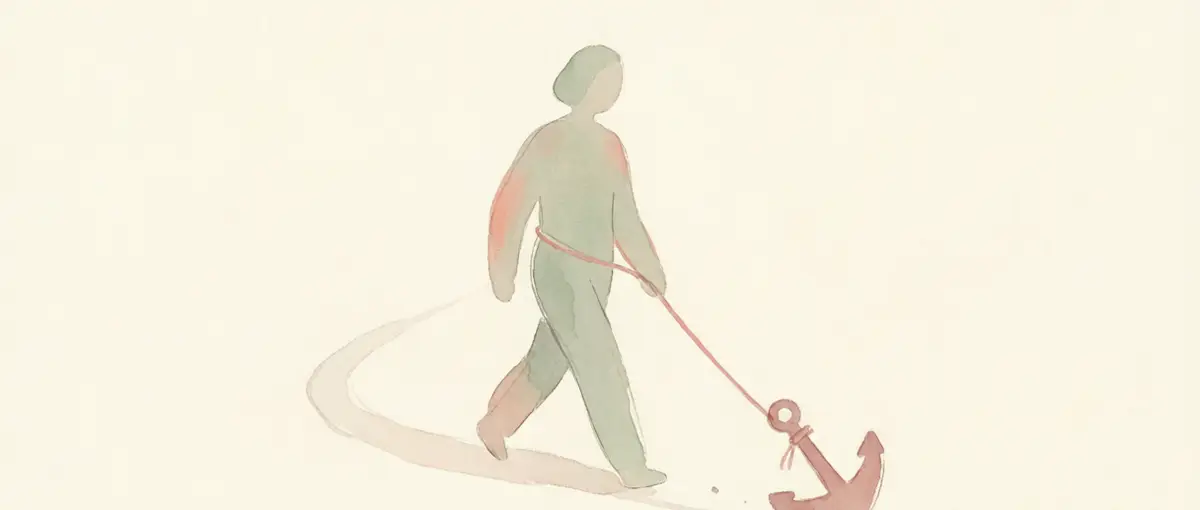
You decide to start something over — fitness, a language, a different way of living. The plan is solid, yet quietly you keep a backup: if it doesn't work, back to the old way; if you can't hold on, there's a place to retreat.
Sounds responsible, right? How can a safety net for yourself be wrong.
But you soon find that backup is like a little parachute worn on your back. Not heavy? It is. Halfway up, your hand instinctively checks it's still there, and your mind splits in two. Worse, because you know someone will catch you if you fall, you fear falling less — so you climb looser than you would without the chute, and your steps go ragged.
The backup was meant to let you dare to set out. But it often becomes a channel for escape. When it gets hard, you don't grit your teeth and push through; you just slide down, since someone's down there to catch you anyway. You think you're covering the downside, but you're digging a pit you can bail into anytime.
One more layer: people who keep a backup often can't truly commit. You give the new plan eighty percent, leaving twenty hanging on the old road. The result is uneasy on both ends — the new doesn't grow, the old loosens bit by bit. You didn't get double insurance; you split yourself in half.
Try a different move. Before setting out, think through clearly what's worst, and how you'd wrap up if it fails. Understand it, then set it down. Not that you don't prepare — that once prepared, you stop clutching it. Tell yourself: this stretch, I walk with all I've got; I'll look back at the exit only if I truly need it.
Committing isn't recklessness; it's giving the thing a chance to be taken seriously by you. When you stop preparing to retreat at any second, you actually walk steadier, because your whole weight rests on this one step in front of you.
Some worry that no backup is too much of a gamble. The real point is: is the backup something you've thought through in your head, or a crutch you hold in your hand every moment? The former is the contingency an adult should have; the latter is practicing giving up before you've even left.
Try a small experiment: next time you restart something, for the first three days deliberately don't open anything tied to that exit — don't refresh the old job board, don't flip through the old habit log. You'll find those three days you're more focused than before. When the hard part really comes, then decide whether to retreat — and then retreat is a conscious choice, not a habitual slide.
You may find that when the exit is no longer in your hand, you think of leaving less. With a settled mind your step is steadier, and the hard parts that made you want to flee become things you can cross one step at a time. The backup is still in your heart, just back where it belongs: in the drawer, not in your grip. Carrying too much at the start isn't safety, it's weight. Travel light and the road goes far. You don't want no safety — you want a safety that's knowing you can cope, not being forever ready to run. Set the thought of retreat down on the rack, and your hands are free to grab the place you actually mean to go. That's what starting over should look like.
Stop hanging the exit at your side like a crutch. It should exist when you've thought it through, not yank you backward at every step. Put it down, and you can see the road ahead — and walk your own direction.
Written and reviewed by DustEcho Editorial for self-reflection and cultural inquiry—not counseling, medical advice, or a clinical diagnosis.
Not sure where to begin?