Why do I freeze instead of feel?
DustEcho Editorial
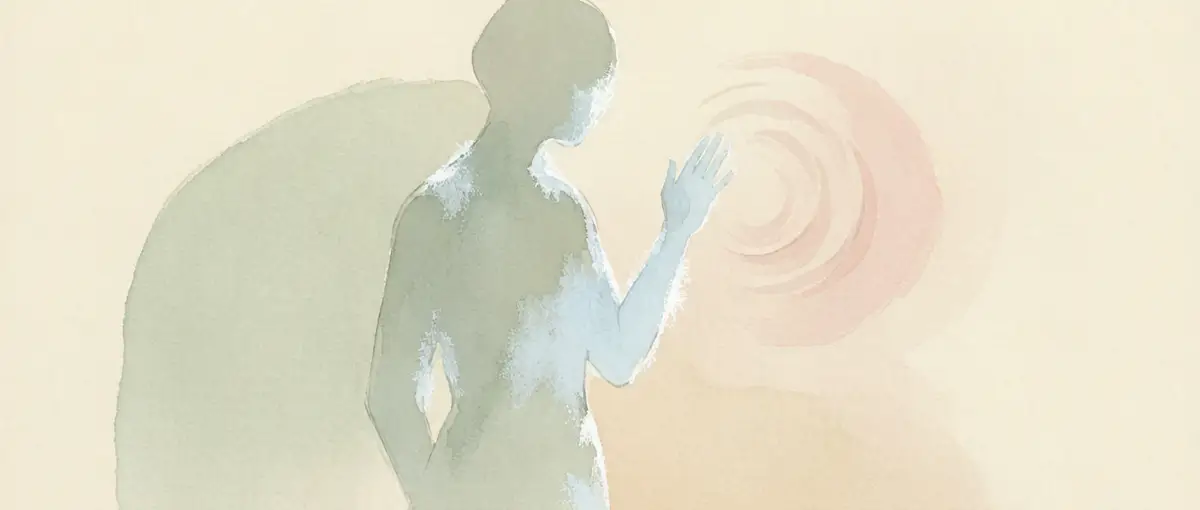
Have you ever had a moment like this: something happens that's supposed to make you sad, or happy, and everyone around you has already reacted, but you just stand there, as if someone hit pause. Not that you don't want to move — you can't. Your throat tightens, your limbs go heavy, your mind goes blank, and you can't squeeze out a single complete sentence.
A lot of people read this as "I'm heartless" or "I'm too cold." But anyone who's lived it knows: freezing isn't the absence of feeling. Quite the opposite — the feeling arrived too hard and too fast, and the body simply couldn't catch it.
We're trained from childhood to "process" emotions: name your sadness, explain your anger, even express your joy appropriately. But no one teaches us that when a wave of feeling crashes down, it's okay to freeze for a second first. That freeze is the body saying: too much, stop a moment, let me catch my breath.
It's a bit like a room whose door was flung open all at once. The door isn't broken; you just weren't ready for how bright it is inside. In that second your system chose "lock" over "open" — not because you're refusing, but because you're afraid that if it opens all the way, you'll be swept away.
So you stand there frozen, words caught in your throat, expression fixed. To others you look like a stone; only you know that inside, a soundless earthquake is happening.
This gets confused with "emotional numbness," but it points the other way. Numbness is when the threshold for feeling gets worn down, so only a huge stimulus reaches you. Freezing is when the threshold is still there, but what's behind the door is too much and too sudden, so the body instinctively pulls the gate. One is under-sensitive; the other is over-sensitive — so sensitive that the system hits pause for you.
The freeze response has a name in psychology; it's kin to "fight or flight." When the brain judges "I can't win and I can't run," the body drops into a temporary stillness, like a small animal playing dead when danger appears. This isn't weakness; it's an old program wired into the body, making the call for you before you've even registered the threat.
What's interesting is that this response often gets triggered in seemingly safe moments — a caring "are you okay," a sudden hug, someone looking at you earnestly waiting for you to speak. Instants that seem ordinary to others can read to your body as "too much." And so it locks again.
So don't treat freezing as a social failure. It's just your protection running too fast, outpacing your reason. It wants to guard you; it only picked the wrong setting.
Why do I freeze instead of feeling my emotions?
A strong or sudden emotional wave can trigger a protective pause: your body slows speech, movement, or access to words while it tries to regain safety. That does not make you cold. Give yourself permission to say, "I need a moment before I respond," step away briefly, and return when you have more capacity.
How can I unfreeze when emotions feel too intense?
Start with the body rather than forcing an explanation: feel your feet, lengthen one exhale, name one thing you can see, and choose the smallest next action. If freezing is frequent, frightening, or connected to trauma symptoms, a qualified mental-health professional can help you work with it safely.
Want to understand what your freeze response is protecting?
If your body hits pause before you can speak or feel, gentle self-exploration can help you approach the pattern with patience instead of self-blame.
What you can do isn't force yourself not to freeze, but afterward, slowly crack that door open a slit. Start small: allow yourself to say "I can't speak right now," allow yourself to step away for a bit, allow yourself to sit in the feeling five more minutes before responding. None of this is retreat; it's teaching your body that here is safe, we can go slow.
Next time you freeze, don't scold yourself "why am I like this again." Try saying inwardly: I'll pause a moment, that's okay. Give the body time; once it confirms it's safe, the door will loosen on its own. You don't need to "process" anything right away. Merely allowing yourself to stay there is already taking care of yourself.
Keep reading: Why Can't I Name What I'm Feeling · Why Do I Feel Like I'm Not Really Here · Why do I feel nothing when others are upset
Written and reviewed by DustEcho Editorial for self-reflection and cultural inquiry—not counseling, medical advice, or a clinical diagnosis.
Not sure where to begin?