Tianji: When the Mind Just Won't Switch Off
DustEcho Editorial
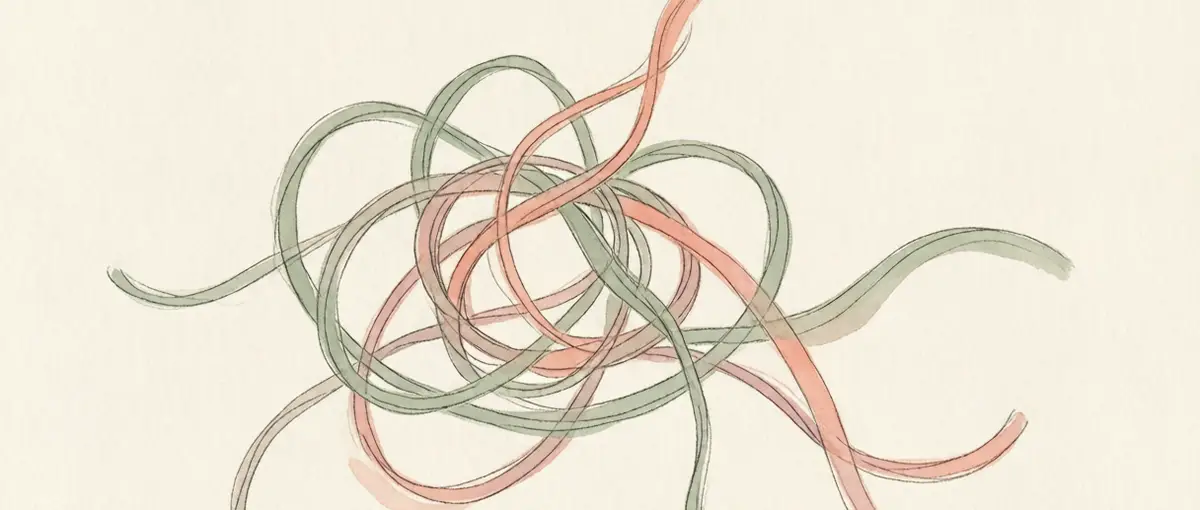
Some people, before they fall asleep, have already run through tomorrow's schedule three times in their head. Not that they can't sleep — their mind just won't clock out. On a weekend they want to go out, the route, the weather, the backup plan have all been simulated in their head; by the time they actually move, they're already tired. Tianji describes exactly this texture of "the mind always turning."
It's not a stand-in for "smart," nor a verdict of "destined to travel." Put into today's language, Tianji is more like a restless analysis instinct — take it apart, think it through, plan it out the moment something comes up, even when the thing doesn't really call for that much thought.
What This Texture Looks Like
Someone strong in Tianji often runs several threads in their head at once. While others are still feeling the present moment, he's already projecting the next step, the step after. The upside is thoroughness, having a plan, staying calm when things happen; the downside is that most of the time it isn't even necessary, yet the mind starts running on its own.
He doesn't overthink on purpose. The moment uncertainty arrives, he fills it with "thinking." Like a gear always turning in his chest, spinning even when idle, never stopping. The emptier it gets the more it turns; the more it turns the harder it is to stop — until "doing nothing" itself becomes something that needs planning.
Its Two Sides
The good of Tianji is sharpness and thoroughness. Many things haven't happened yet and he already sees the signs; a friend hits a hard problem and he can lay out several clear paths from the side. That footing of "everything is prepared" is what Tianji gives.
The tiredness of Tianji also comes from the same place. The more finely he thinks, the easier he gets trapped in "what if…". When plans fail to keep up with change, he's more frustrated than anyone — because the script he'd thought about for so long has collapsed. Also, thinking too densely often means "thinking it clear" replaces "doing it" — stuck in the head, unable to get out. He's collected a drawer full of plans, but few actually land.
In Relationships
In close relationships, Tianji easily turns "thinking for the other person" into love. He doesn't just think about his own matters; he silently runs through the other's possibilities and the two of them's future as well. The problem is, this thoughtfulness sometimes becomes invisible pressure — the other didn't ask for that many contingencies, yet he's already prepared them, which makes him look anxious instead.
He also easily "over-reads" in relationships: one line, one tone of voice, and he can replay it ten times in his head, deducing conclusions even he isn't sure of. The other was simply tired, yet he's already imagined a cold war. Tianji in relationships must learn to tell apart "he is thinking" and "I'm thinking for him" — they're two different things. Don't force your own script onto the other person.
With Money
Tianji isn't impulsive with money; rather he loves researching, comparing, finding the "optimal solution." For a big purchase he'll make a spreadsheet; for managing money he needs to understand the underlying logic before he's at ease. This is a strength — hard to be taken advantage of.
But he may also overthink and miss the window: by the time he figures it out, the chance is gone; or he jumps back and forth between different plans, unable to land. What Tianji should watch with money is "analysis" mutating into a variant of "procrastination." Thinking it through is good, but with money, sometimes "act first, adjust later" pays better than "move only once it's perfect."
At Work
The workplace is where Tianji shines. Planning the layout, producing proposals, running simulations — he's naturally good at these. In many teams, the person who "straightens out the messy stuff" is often Tianji.
But Tianji can also be slowed by his own thoroughness: revising a plan eight times because he always feels it could be better; or wanting to align everyone before moving, missing the rhythm as a result. What he needs to learn is to set a deadline on "thinking" — once you've thought it through to seventy percent, act. The remaining thirty percent will clarify itself as you go; it's not something you can sit and think out.
How to Live With It
If you feel you're Tianji, try to accept this: your mind is a tool, not the boss. That it won't switch off doesn't mean you have to listen to it.
A few small methods: separate "thinking" and "doing" into different time blocks — daytime for simulation, but set a ritual for "the mind clocking out" (for instance, close the laptop the moment the list is written); allow yourself to "act before thinking" — some things only become clear once you're doing them, not before you've thought them through. Also, tell apart "I'm preparing" and "I'm using preparation to avoid action" — the latter looks busy, but is really just pacing at the door.
If there's a Tianji around you, don't find him naggy or overthinking. He's not distrusting you; his mind just turns on its own. Give him a clear "stop thinking, this is it" checkpoint, and he'll actually breathe a sigh of relief — the gear that's been running nonstop can finally stop.
In the End
Tianji isn't "smart," nor "a life of toil." It only points out a kind of person: your sharpness is a gift, but don't let that never-resting gear grind your days into nothing but contingency plans, with no present moment. Thinking things through is good; but now and then, it's worth thinking nothing at all, just sitting there, watching the sky slowly darken.
What does Tianji mean in everyday life?
Tianji can be read as a restless intelligence that keeps analyzing uncertainty. Its strength is seeing patterns and possibilities; its risk is letting preparation replace action and turning every decision into another draft.
How can I stop overthinking and start acting?
Set a short thinking window, choose the smallest reversible step, and let new information arrive through action. You do not need to solve every possible future before making a safe decision.
Want to understand why analysis feels safer than committing?
If your mind keeps building plans to avoid the vulnerability of a first move, gentle self-exploration can help you let one plan land in the real world.
A Modern Psychological View
That habit of Tianji's — "filling uncertainty with thinking" — looks a lot like rumination in anxiety: the mind uses thinking to fake control. These are worth reading alongside:
- Why do I keep preparing instead of starting — the place Tianji gets stuck most easily is "thinking" replacing "doing" (Why do I keep preparing instead of starting).
- Why do I know a lot but still can't live well — knowing a lot isn't the same as living well; the gap between thought and life (Why do I know a lot but can't live well).
- Why do I always fear making mistakes — the moment uncertainty arrives he tenses up; Tianji's rumination often starts here (Why do I always fear making mistakes).
Written and reviewed by DustEcho Editorial for self-reflection and cultural inquiry—not counseling, medical advice, or a clinical diagnosis.
Not sure where to begin?