ESFJ Personality: Connection, Care, and Self-Worth
DustEcho Editorial
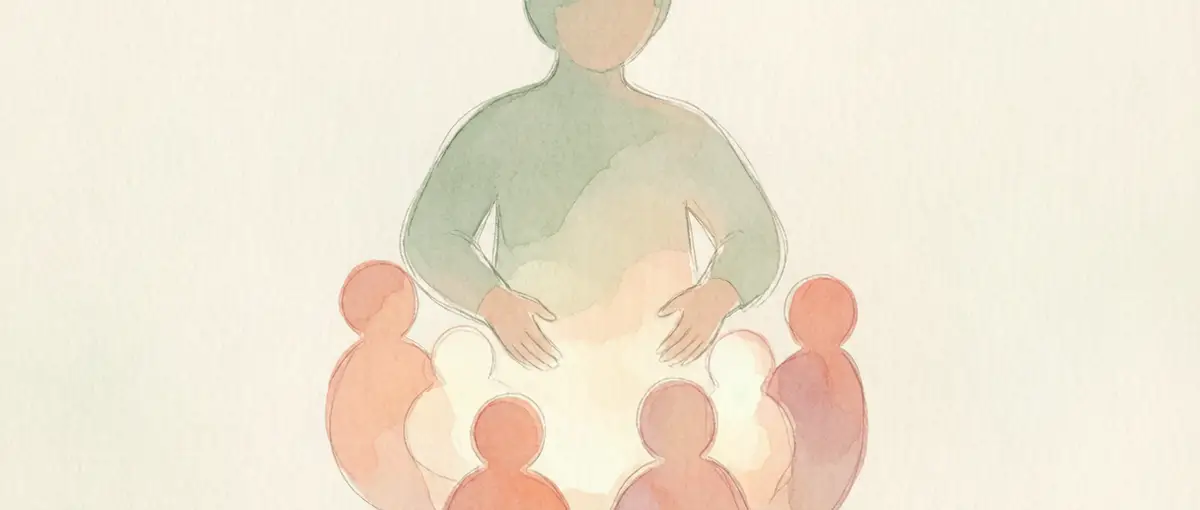
ESFJ is an MBTI personality pattern often associated with extraversion, sensing, feeling, and judging. ESFJs may naturally notice practical needs, create belonging, and keep relationships connected. Their care is a strength, but their worth does not depend on always organizing, helping, or being needed.
People like you often get sorted into the ESFJ box: Extraverted, Sensing, Feeling, Judging. Others call you "the organizer," "too clingy." But really, you were simply born seeing "we" as heavier than "me."
You Are the Glue That Holds Relationships Together
The Feeling axis in an ESFJ points outward, and it lands in concrete places. You remember who fell out with whom, who just went through a breakup, whose birthday is coming up. You are not deliberately playing peacemaker — you genuinely cannot stand a relationship going cold, a circle breaking apart. With every bit of organizing, you warm everyone back together.
This ability is precious. A lot of groups are still standing because you, the "invisible logistics person," quietly hold them together. You are the kind of person about whom people say, "as long as you're there, we're still a family." Your presence does quiet work that no one names, yet everyone leans on. When the plan comes together and no one is left out, it is usually because you were the one thinking three steps ahead.
You Remember So Many Little Things About Other People
Who takes their coffee with less sugar, whose kid is about to take the high-school entrance exam, that restaurant someone mentioned wanting to try but still hasn't — these fragments, you store them all for everyone. One ESFJ said she keeps birthday reminders for more than thirty friends in her phone, yet no one remembers hers. She laughed and said, "I'm used to it" — but in that laugh there was a little emptiness.
Your goodness is so quiet that others often cannot see it. You have done nothing wrong. It is just that the phrase "by the way" quietly saved everyone else the "thank you" that should have been said out loud. Because you do it so naturally, the effort reads as nothing at all, and the people around you stop noticing that an actual person is spending actual care to keep the edges of their lives smooth.
It's Not That You Can't Be Without People — You're Afraid the Connection Will Go Cold
People often say you "care too much about what others think." But what you are truly afraid of isn't being judged — it's the relationship breaking. You tie your sense of safety tightly to being needed. The moment no one asks you to organize anything, a quiet panic rises: am I not important anymore?
This makes it easy for you to burn out. You carry everyone's comfort on your shoulders, yet rarely does anyone turn back and ask, "Are you tired?" You are there like air — everyone has grown used to breathing you, and so they forget that air, too, has to be supplied by someone. The very steadiness that makes you dependable also makes you invisible, and the longer you hold everything up alone, the harder it becomes for anyone to notice you are swaying.
Every Now and Then, Stop Being the One Who Catches Everyone
You Keep Track of Everyone's Little Things
At the department dinner, you had figured out a week ahead who doesn't eat spicy food, who avoids cilantro, whose birthday meant a hidden cake — you had even booked that restaurant someone mentioned wanting to try. No one specifically thanked you that day, but the table ran smoothly and no one was awkward. When it ended, you helped clear the dishes, pack up the leftovers, and settled the drunk ones one by one. Only at home did you realize you had been so busy all evening you hadn't eaten a single warm bite. As you picked at your food, you thought: if no one had kept track of these things, everyone would probably have forgotten how much quiet effort I had spent. Those unseen efforts are also a kind of strength of yours, and deserve to be seen by you yourself. You don't have to wait for others to praise you before feeling you didn't labor in vain.
Your small, scattered kindnesses often go unnoticed — but that is not your regret. It is the word "by the way" that blocked the thanks others should have said. You don't insist on that thanks; it's just that now and then there's a little emptiness, as if you had scattered your strength into a wind no one saw. But you should also remember: besides keeping others in mind, someone should keep you in mind too. Next time, try handing one small thing over — let me rest a bit too; this time, you remember it. In a relationship, the cared-for you also deserves to be caught gently. You've kept track of others' good all the way; you should leave a line, written for yourself.
When You Can't Let Go, Others Won't Lift a Finger
For a family celebration, you handled everything from the invitations to the place cards all by yourself. Your cousin offered to help; you glanced and said, "yours won't be as good as mine." She backed off awkwardly. You worked until three in the morning, even dividing the wedding candy by headcount, not a jin short. Afterward you felt a little empty: clearly someone was willing to lend a hand, so why did I end up carrying it alone? It's not that you didn't trust her — you were afraid she wouldn't meet your standard, and you'd just have to redo it, so you did it yourself, faster. But the time you saved bought you a heavier shoulder, and a more distant her.
You turned "everyone needs me" into a kind of safety — yet you also pushed others away. You catch for everyone, and others never learn to do it themselves; in time they even feel your tirelessness is a burden. Try truly handing over one not-so-critical thing; it's fine if it's done badly once. Let someone have the chance to share the load with you, so the relationship isn't your one-person solo show — and there's room, too, for a you who gets tired. Loosen your grip a little, and the relationship gains a crack where light can get in. As long as you keep holding everything up, others keep assuming you don't need holding up — and so the more you hold, the lonelier you become.
The Moment the Group Goes Quiet, You Can't Sit Still
The group chat's been quiet for half a day, and you can't help sending a sticker, sharing an article, asking "you there?" It's not that you're idle — it's that "let's not let everyone drift apart" feeling rising up, and you can't sit still. Once you held back and didn't send anything; you checked your phone a dozen times that night, afraid of missing someone, even more afraid of being the one left behind, the one who can't even wait for a greeting. The more anxiously you chase liveliness, the easier it is to miss the quiet ones who were there all along. Whether the group is lively was never the measure of whether you deserve attention.
You tie your sense of safety too tightly to being needed. The moment no one asks you to organize, a quiet panic rises: am I not important anymore? But a relationship isn't held up by your alone moving. Occasionally let the group stay quiet, let the circle breathe for itself, and you'll find the people who are truly close won't walk away just because you said one less thing. You deserve to be remembered — never because of how much you did for him, but because you are you. Being remembered was never something that should hang only on the things you did for others. Take yourself seriously first, and others will dare to take you seriously too.
If you're this kind of ESFJ, the most important lesson to learn is, at the moment you most want to organize everyone, to step back half a step now and then: let the relationship grow on its own, and let yourself rest a little.
You can keep being the one who warms everyone together. But also try, outside the crowd, to keep a little quiet that belongs to no one but you. You remember others, and you should be remembered by others too. You don't have to be present forever — an occasional absence won't make the world collapse, and you will catch your breath. You deserve to be remembered, not by how many things you got done, but because you, as a person, are simply worth being taken seriously.
What does ESFJ mean in MBTI?
ESFJ stands for Extraverted, Sensing, Feeling, and Judging. ESFJs are often described as warm, practical, socially attentive, and committed to shared routines and relationships. These are preferences rather than a duty to manage everyone; healthy ESFJs also leave room for rest, boundaries, and being cared for.
Want to see your own personality pattern?
Try the 5-minute personality exploration to reflect on how connection, care, and self-worth work together for you.
Keep reading: Why Your Mind Is Always Mapping Out Tomorrow's Battle Plan · Why ENTPs Can't Resist Taking Every Rule Apart · Why I Light Up the Moment I Step Into a Lively Crowd: The ESFP Personality
Written and reviewed by DustEcho Editorial for self-reflection and cultural inquiry—not counseling, medical advice, or a clinical diagnosis.
Not sure where to begin?